
When Fresh Breath Actually Starts - and Why It Takes a Routine
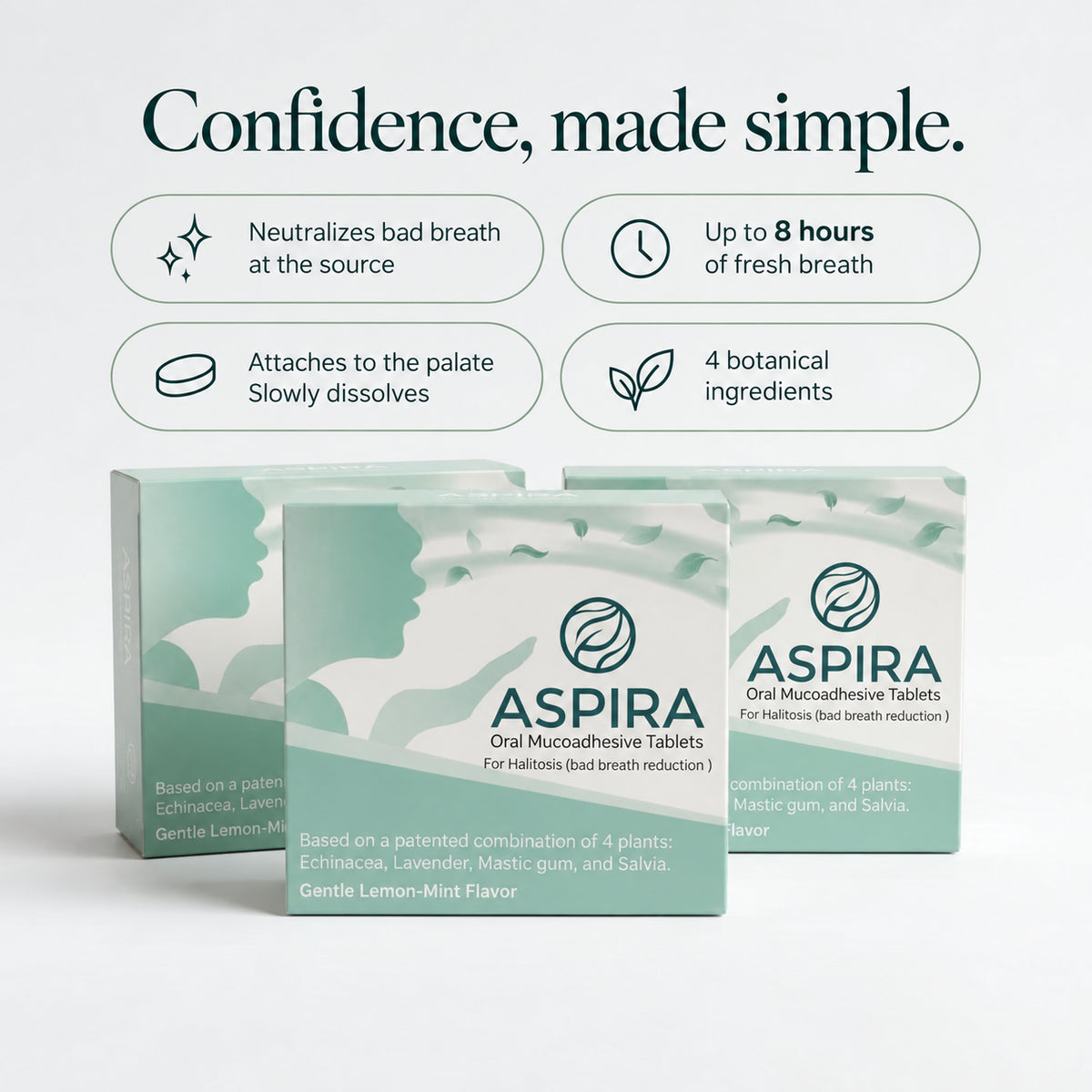
Lior HendlerMost products for bad breath promise a rescue. A mint, a rinse, a strong flavour meant to erase an awkward moment. ASPIRA was never built for that — it was built to change your baseline, which is a slower and more useful thing.
A single tablet gives you hours of freshness rather than minutes — that part is immediate, and it's what the published trial measured. The bigger shift is behavioural: people who use ASPIRA as a daily habit rather than an emergency fix stop thinking about their breath at all. That's not a chemical effect building up. It's what happens when the problem stops being unpredictable.
Why it behaves differently from a mint
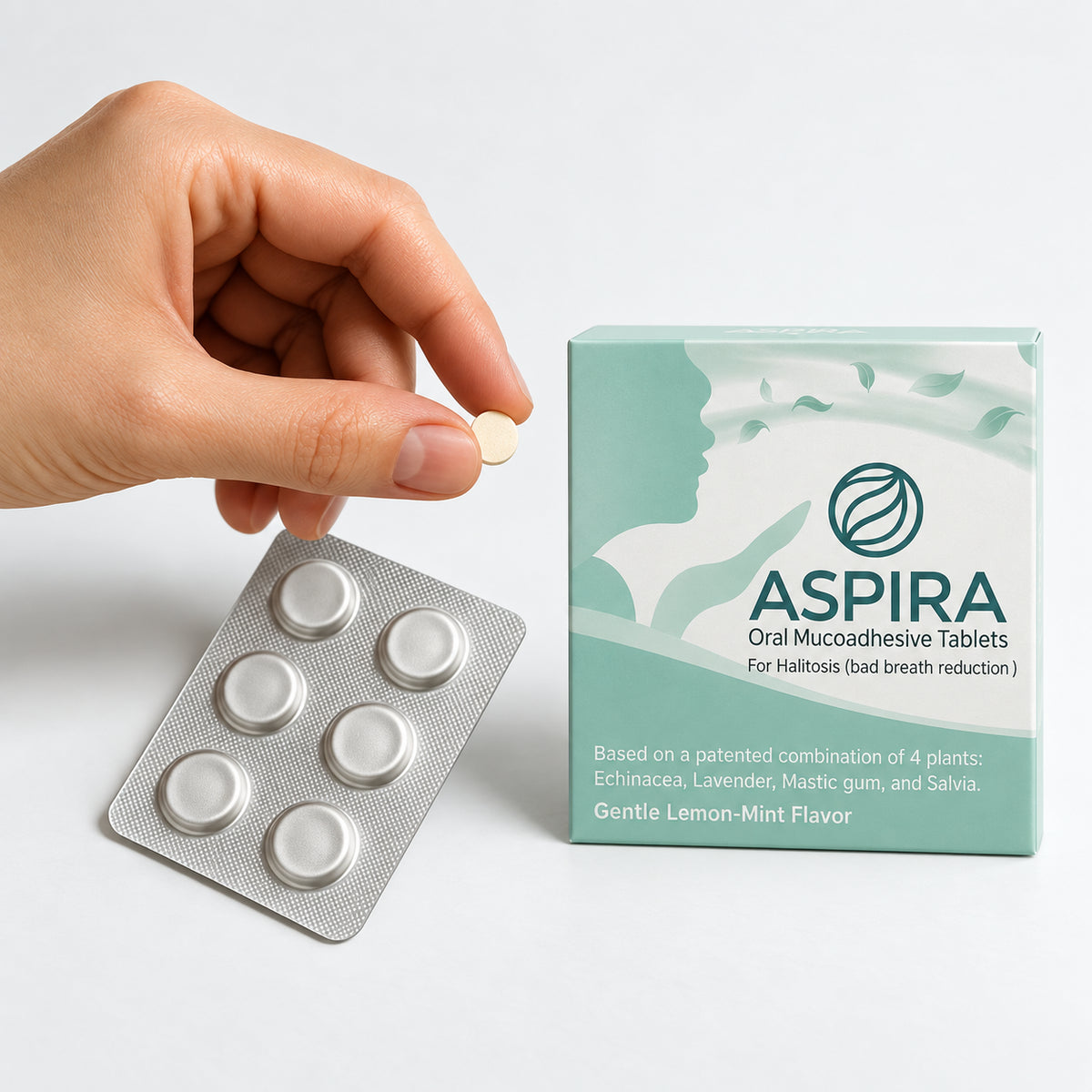
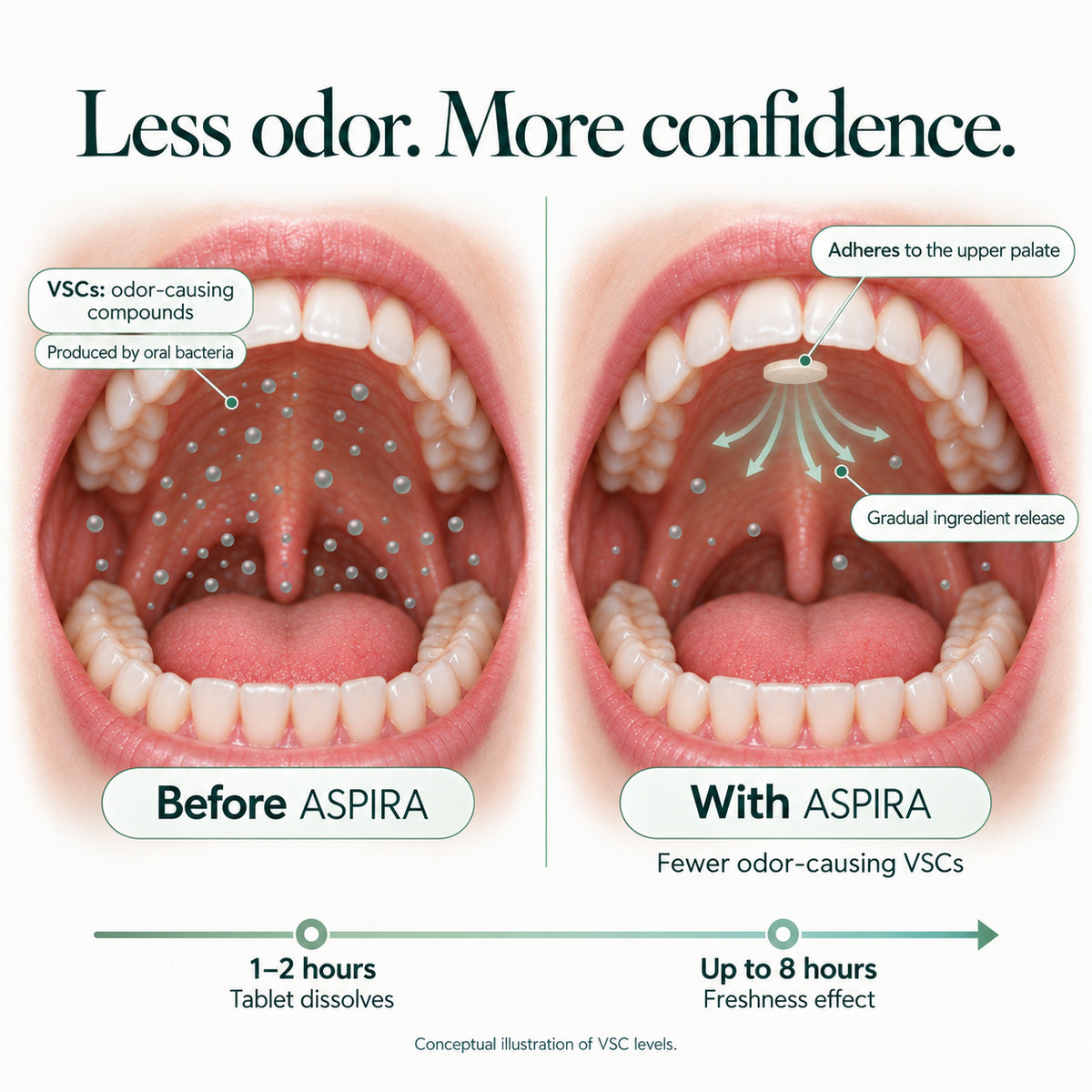
ASPIRA is a plant-based tablet that adheres gently to the palate and dissolves slowly. That sounds like a small technical detail, but it's the whole reason it behaves differently from gum, sprays or mouthwash.
Most breath products work in bursts. This one works in continuity.
By staying in contact with the oral tissue for hours, its ingredients are released gradually rather than all at once. There's no sharp minty spike and no sudden drop-off — just steady background presence. People often describe it not as something they feel, but as something they stop thinking about.
So when do you actually notice a change?
This is where it's worth being precise, because two different things get blurred together in this category — what has been measured, and what people describe. They're not the same, and we'd rather separate them than let one borrow credibility from the other.
What the research measured
In a randomized controlled trial of 40 people published in the Journal of Breath Research, participants used the herbal tablet, an identical placebo tablet, or a commercial mouthwash. They used it in the evening and again the next morning, and measurements were taken the following afternoon.
Compared with placebo, the herbal tablet significantly reduced odor scores rated by trained assessors, volatile sulfur compound levels, and a salivary enzyme marker of bacterial activity.
Those were short-term trials. They tell you what happens across a day. They do not establish anything about weeks or months, and we don't claim otherwise.
What people describe
Over the first days, most of what people notice is duration — freshness lasting through an afternoon or a night instead of fading in twenty minutes.
Over a few weeks, what they describe changes character. Not "fresher," but fewer unexpected moments. Less checking. Less quiet anxiety mid-conversation.
That's a reasonable thing to expect from any habit that removes an unpredictable worry — and it's a report about how people feel, not a measured clinical outcome.
One tablet, placed once, releasing gradually.
Why consistency matters
ASPIRA doesn't cure bad breath in one dose, and any product claiming to has misunderstood the problem.
Breath odor isn't a one-time event. It's the result of continuous bacterial activity in the mouth — bacteria that repopulate within hours of anything you do to them. A single strong intervention can't hold against a process that restarts every few hours. Coverage has to be repeated to be reliable, which is an argument about scheduling rather than chemistry.
That's the honest case for routine. Not that something accumulates, but that a gap you've covered is a gap you no longer have to think about.
How people actually fit it in
There's no correct moment. What matters is that it's the same moment.
| When | Why it works for them |
|---|---|
| Morning, with brushing | Attaches to an existing habit, so it's hard to forget. Covers the workday. |
| Night, before bed | Covers the longest dry stretch, when saliva flow is at its lowest. |
| Before long days or events | Meetings, flights, dinners — the situations where reapplying anything isn't practical. |
| Same time daily, whenever that is | The least interesting answer and the most effective one. Consistency beats timing. |
What it doesn't replace
Worth saying plainly, because it affects whether this works for you at all:
- Cleaning your tongue. The rear third of the tongue is the largest source of breath odor. A scraper costs a few dollars and does more than any product here.
- Brushing and flossing. The foundation. Nothing substitutes for it.
- A dentist, if your breath is persistently bad despite both, or if your gums bleed. That's a treatable cause and worth treating properly.
ASPIRA covers the hours between those things. That's a real gap, and it's the one it was designed for — but it's a gap, not the whole picture.
The quiet part
The meaningful shift isn't the first tablet. It's when the question changes from "will this save this moment?" to not asking the question at all.
One tablet doesn't tell the story. Consistency does.
Shop ASPIRA → Read the evidence
Frequently asked questions
How long does one ASPIRA tablet last?
The tablet stays in place until it has fully dissolved, which is a matter of hours rather than minutes. In the 2013 randomized controlled trial, participants used it in the evening and the following morning, and the differences from placebo were still measurable that afternoon.
How long before I notice a difference?
The duration difference is immediate — the first tablet lasts considerably longer than a mint. What people describe over the following weeks is different in kind: fewer unpredictable moments and less checking. That's a report about confidence rather than a measured clinical outcome, and the published trials were short-term.
Do I need to use it every day?
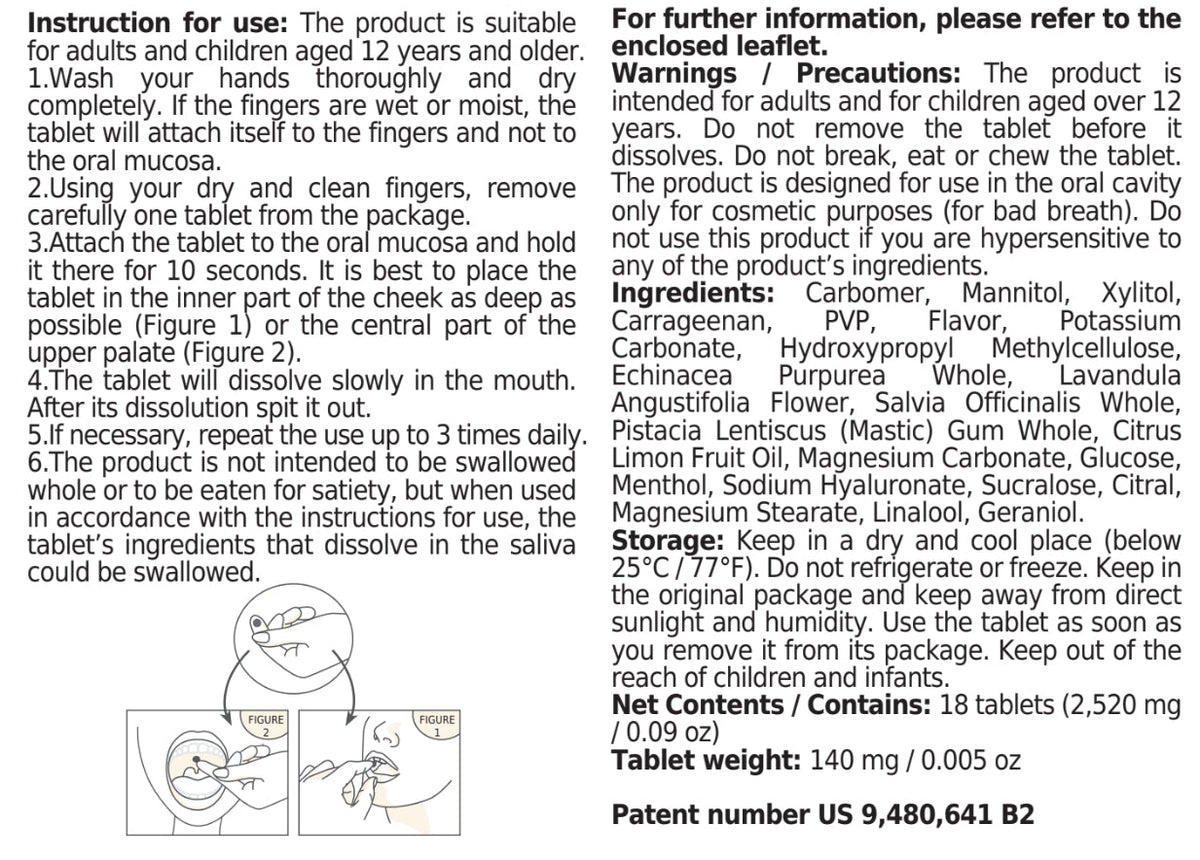
You don't have to, but it's what most people who are happy with it end up doing. Breath odor is produced continuously by bacteria that repopulate within hours, so coverage works best when it's repeated rather than occasional. It's intended for adults and children aged 12 and over, up to three times daily.
Can ASPIRA cure bad breath?
No, and no breath product can. ASPIRA is a cosmetic product for freshening breath. Persistent bad breath usually comes from tongue coating, dry mouth or gum health, and those are addressed by tongue cleaning, hydration and a dentist respectively.
Should I use it instead of brushing or cleaning my tongue?
No. It doesn't replace either. Cleaning the rear third of your tongue daily is the single highest-impact thing you can do about breath odor, and brushing is the foundation underneath everything. ASPIRA covers the hours in between.
What causes bad breath — the full guide → · Every option compared → · Do I have bad breath? →
ASPIRA is a cosmetic oral-care product intended to freshen breath and reduce unpleasant oral odor. It is not a drug, not a dietary supplement and not a medical device, and it is not intended to diagnose, treat, cure or prevent any disease. Persistent bad breath that does not improve with good oral hygiene should be assessed by a dentist.