
Why Athletes Get Bad Breath (And It's Not Just Dehydration)
Lior HendlerYou push hard in the gym. You eat clean. You drink your water. So why does your breath seem to get worse after a workout, not better?
If you've noticed a sharp, almost chemical smell on your breath during a long run — or had a training partner subtly offer you a mint post-session — you're not imagining it, and you're not alone. Exercise-related bad breath is a real and surprisingly common issue among active people, and dehydration is only one piece of a more interesting puzzle.
Here's what's actually going on.
Your Mouth Wasn't Built for Cardio Breathing
When you're pushing through a tough interval session or a long run, you naturally shift from nasal breathing to mouth breathing. It's unavoidable — your body needs more oxygen, and the nose simply can't keep up.
The problem is that your nose does a lot more than just let air in. It humidifies, filters, and — crucially — it keeps your mouth from drying out. When you breathe through your mouth for extended periods, saliva evaporates faster than it can be replenished.
Why does that matter? Saliva is your mouth's primary line of defense against odor-producing bacteria. It neutralizes acids, washes away food particles, and contains natural antimicrobial compounds that keep bacterial populations in check. When saliva drops, bacteria multiply — and the byproduct of that bacterial activity is volatile sulfur compounds (VSCs), the main driver of bad breath. So before you've even finished your warm-up, the conditions for bad breath are already being set.
The Protein Problem: When Your Diet Works Against You
If you're eating for performance — high protein, frequent meals, maybe a shake or two a day — your breath may be paying the price.
When your body metabolizes protein, it produces ammonia as a byproduct. Most of that ammonia is processed by the liver and excreted in urine, but some enters the bloodstream and makes its way to the lungs, where it's exhaled through the breath. Athletes who eat very high amounts of protein, or who are in a caloric deficit while training heavily, may notice this as a sharp, slightly chemical smell — distinct from the typical sulfur-based odor most people associate with bad breath.
This is sometimes called metabolic bad breath, and it's not caused by anything in the mouth at all. Brushing harder won't help much. The source is systemic.
Some research also suggests that high-protein, lower-carbohydrate eating patterns — common among athletes focused on body composition — may compound this effect by pushing the body toward a mild state where additional volatile compounds are produced as it burns fat for fuel. The result can be a breath quality that lingers well after the workout ends.
Recovery Drinks Are Doing You No Favors
After a hard workout, many athletes reach for a recovery shake, sports drink, or energy bar. These products do their job for muscle recovery — but they're often high in sugar, and they're landing in a mouth that's already dry and bacteria-friendly.
Oral bacteria feed on sugar. A dry mouth speeds up bacterial growth. Put the two together right after exercise — when saliva is depleted and bacteria have already been multiplying for 30–60 minutes — and you've created a particularly favorable environment for odor production.
This doesn't mean you should skip post-workout nutrition. But it's worth being aware that what you eat and drink immediately after training can contribute to how your breath smells for the next hour or two.
Dehydration Compounds Everything
Even mild dehydration — common during exercise — measurably reduces saliva output. And reduced saliva means less natural rinsing, less bacterial control, and less buffering of the acids that contribute to odor.
Many people drink water during workouts but still end up mildly dehydrated, especially in warmer conditions or during longer sessions. The result is a compounding effect: mouth breathing dries out the oral environment, dehydration keeps saliva low, protein metabolism adds its own volatile compounds, and then recovery nutrition introduces sugar into that already-compromised environment.
Rehydrating promptly after exercise does help — both with overall recovery and with restoring saliva flow. Rinsing or drinking water before eating post-workout can also help clear some of the bacterial buildup that accumulated during training.
What Actually Helps
Breathe through your nose when you can. For lower-intensity portions of your workout, nasal breathing reduces how much the oral environment dries out. It won't always be feasible at higher intensities, but even partial nasal breathing makes a difference over the course of a session.
Stay ahead of hydration. Sipping water throughout a workout — rather than waiting until you're thirsty — helps maintain saliva flow and reduces the dryness window that bacteria exploit. Most people underestimate how much fluid they lose even in moderate sessions.
Rinse before you refuel. A quick water rinse before eating or drinking something sugary post-workout gives saliva a chance to partially recover before you introduce fuel for bacteria. It takes five seconds and makes a real difference.
Brush before, not just after. Brushing and tongue-scraping before workouts can reduce the starting bacterial load that will multiply during exercise — not just clean up the aftermath. If you're heading to the gym in the morning, this matters more than most people realize.
Think about contact time, not just coverage. Mints and gum offer a quick mask, but their effect fades within minutes — often before your workout is even halfway done. For athletic use, what you want is something that stays active throughout a session, not something you're reaching for every ten minutes.
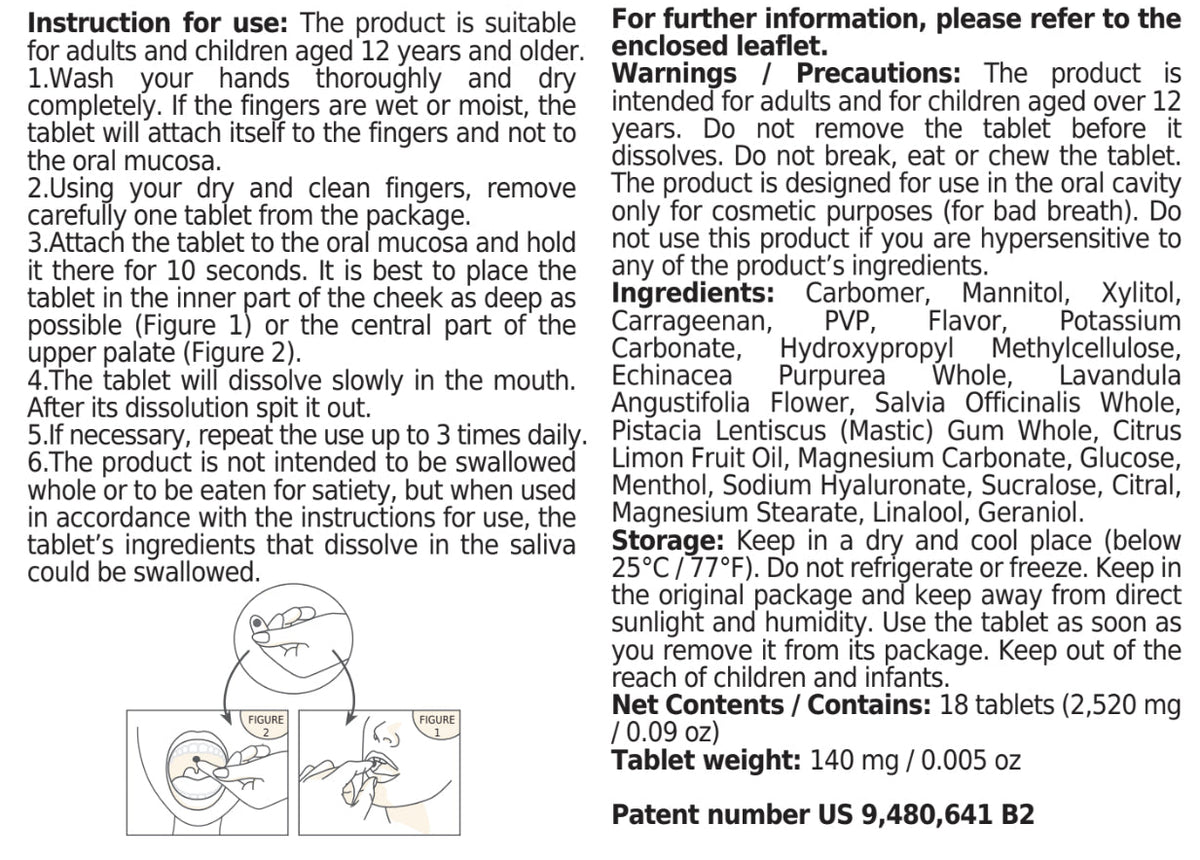
ASPIRA is a slow-dissolving oral care tablet made from plant-based active ingredients — echinacea, sage, lavender, and mastic gum — that have been studied for their antibacterial properties. Unlike a mint that dissolves in under a minute, ASPIRA adheres to the inner cheek or roof of the mouth and dissolves over 2–3 hours, providing prolonged exposure that helps reduce odor-causing bacteria over time. For athletes, that means one tablet can carry you through a full training session without any reapplication.
The Bigger Picture
Exercise-related bad breath isn't a sign something is wrong with you. It's the predictable result of several intersecting physiological factors — most of which are a direct consequence of training hard. The better you understand what's driving it, the easier it is to address.
A combination of good hydration, smart nutrition timing, consistent oral hygiene, and sustained oral care can make a meaningful difference — so the only thing your training partner notices is how hard you're working.
Frequently Asked Questions
Why does my breath smell like ammonia after working out?
An ammonia smell is typically a sign of protein metabolism. When your body breaks down amino acids for fuel — common in long-duration exercise or when eating a high-protein diet — it produces ammonia as a byproduct. Some of that ammonia exits through the breath. It's not harmful, but it can be noticeable. Staying hydrated and ensuring you're eating enough carbohydrates to fuel training (rather than relying heavily on protein for energy) can help reduce it.
Does drinking water help with bad breath during exercise?
Yes — more than most solutions. Water helps maintain saliva flow, which is your mouth's natural defense against odor-producing bacteria. Sipping throughout a workout (rather than waiting until after) is more effective than trying to rehydrate all at once when you're already done.
Why is my breath worse after a protein shake?
A few things are happening at once: the protein itself contributes to ammonia breath through metabolism, many shakes contain sugars or sweeteners that feed oral bacteria, and you're typically drinking them when your mouth is already dry from exercise. Rinsing with water after a shake and before your next meal can help reduce the effect.
Is exercise bad breath permanent?
No. It's tied to specific conditions — dry mouth from breathing, dehydration, diet — that can all be managed. Most people find it significantly reduces with consistent hydration habits and better oral care timing. It's not something you have to simply live with.
Part of our guide to what causes bad breath — VSCs, where they come from, and what reduces them.