
Why Your Breath Keeps Coming Back - Even After You Brush
Most people are too embarrassed to ask it out loud. So let’s answer it - clearly, and without the mint.

Why Your Breath Keeps Coming Back
If you’re reading this, chances are you’ve been asking yourself a question most people are too embarrassed to say out loud:
Why doesn’t my breath stay fresh—no matter how much I brush?
The answer may not be your toothpaste.
You can brush carefully, clean between your teeth, rinse your mouth, and leave the house feeling completely fresh. Then, an hour or two later, the doubt returns.
You’re speaking to someone up close and suddenly become aware of every word leaving your mouth. You turn your head slightly. You create a little more distance. You watch their expression, wondering whether they noticed something before you did.
And when it happens with someone you care about, the feeling can be even worse. You want to lean in. You want to speak freely. You want to stop thinking about your breath for once.
But you hesitate.
Most people assume bad breath is simply the result of poor oral hygiene. While brushing is essential, it is only one part of the story.
Persistent bad breath is often connected to invisible odor-producing compounds called volatile sulfur compounds, or VSCs. These compounds can develop on the tongue and in other areas of the mouth—even when your teeth look and feel perfectly clean.
That is why you can do everything “right” in the morning and still find yourself worrying about your breath before lunch.
Your teeth may be clean. But the compounds responsible for the odor may still be there.
Plant-based · Patented slow-release · Up to 8 hours
Why Mints, Gum and Mouthwash Keep Letting You Down
When bad breath appears, most people reach for the same familiar solutions.
A mint before a meeting. Gum before a date. Mouthwash before leaving the house. Maybe another round of brushing, just to be safe.
And for a few minutes, it works.
Your mouth tastes minty. Your breath feels colder. You assume the problem is gone.
But tasting mint is not the same as removing odor.
Most traditional breath products are built around fragrance and flavor. They create a strong wave of mint, menthol, or sweetness that temporarily covers the smell produced by VSCs.
The odor has not necessarily disappeared. You have simply placed a stronger smell on top of it.
It is the oral-care equivalent of spraying perfume in a room without removing what caused the odor in the first place.
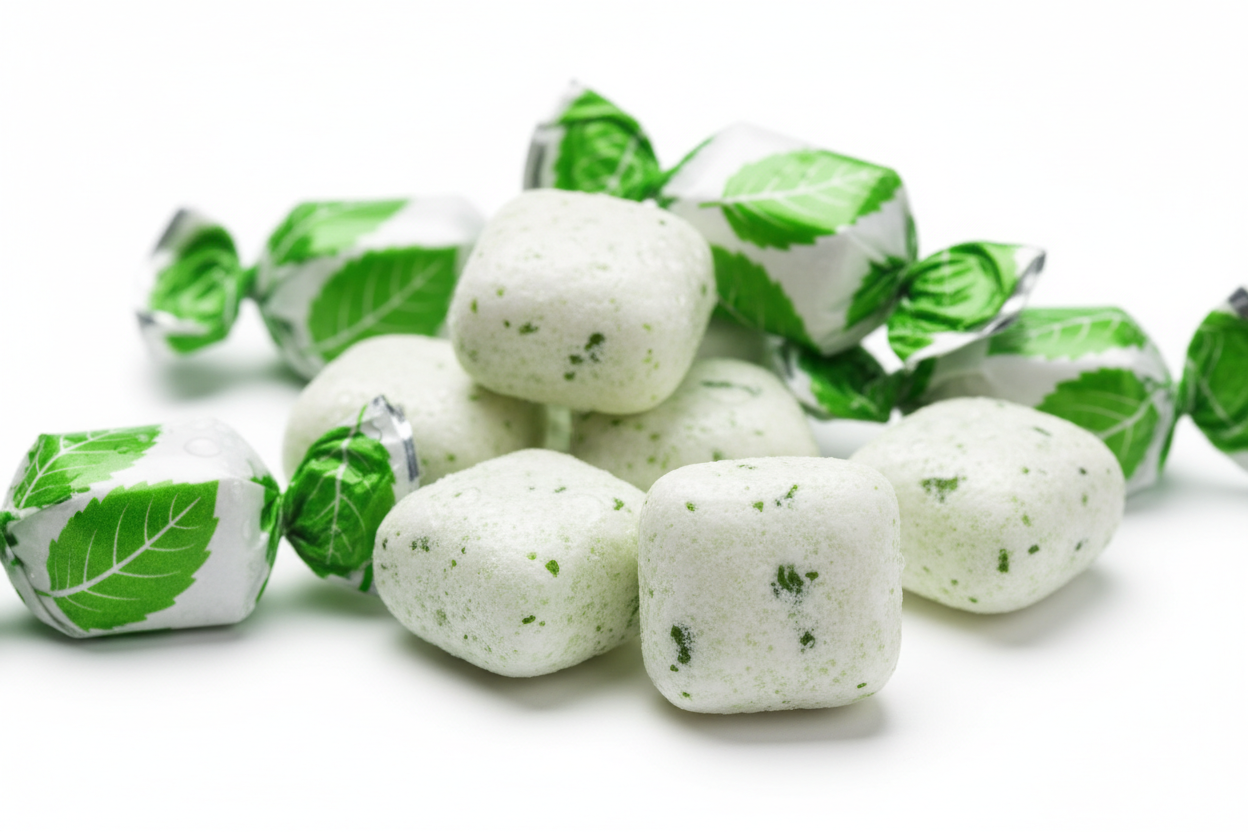
Once the mint fades, the sulfur compounds can still be present—and the concern returns. That is why many people find themselves trapped in a cycle:
Brush. Rinse. Mint. Worry. Repeat.
The problem is not that these products do absolutely nothing. The problem is that they are usually designed to create the feeling of freshness, rather than continuously addressing the compounds associated with bad breath.
And because their effect is often brief, you are forced to keep reaching for the next mint, the next piece of gum, or the next rinse. Not because you enjoy them. Because you do not trust what will happen when they wear off.
Designed to work for hours—not minutes
The Science Behind the Smell
Researchers studying bad breath have increasingly focused on one central group of compounds: volatile sulfur compounds.
VSCs are sulfur-containing gases associated with the characteristic odor of persistent bad breath. They can be produced when microorganisms in the mouth break down proteins and other organic material.
Compounds such as hydrogen sulfide and methyl mercaptan may be present in extremely small amounts, but the human nose is remarkably sensitive to them.
That is what makes bad breath so frustrating.
You may not feel anything unusual. Your teeth may look clean. Your mouth may even taste like mint. But VSCs can still be released into every breath and every sentence.
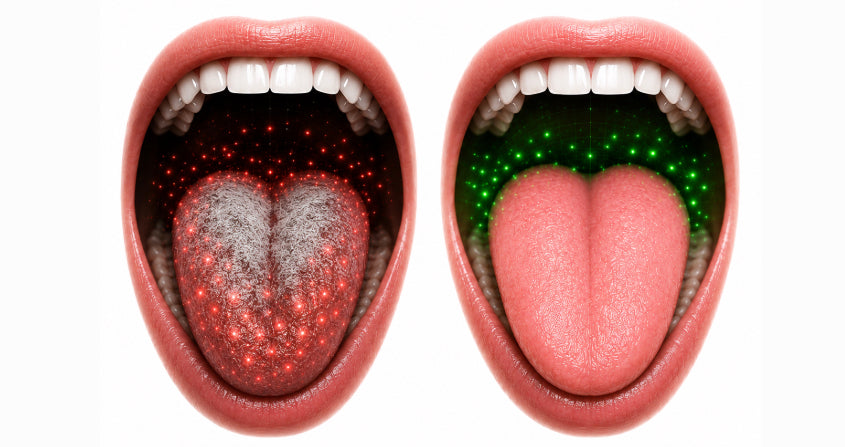
This also explains why simply adding a stronger flavor may not solve the underlying issue. Mint can change what your mouth tastes like without meaningfully changing the level of sulfur compounds being produced or released.
The more important question is not:
“How can I make my mouth taste fresher?”
It is:
“What is happening to the VSCs that are creating the odor?”
That shift—from masking odor to focusing on its sulfur compounds—is what led to a very different approach to breath care.
A different approach—focused on the source
The Science Behind ASPIRA
ASPIRA was developed around a different idea:
Instead of flooding the mouth with a short burst of mint, create a slow-release system designed to remain in place and work gradually over time.
ASPIRA is a small mucoadhesive tablet that attaches discreetly to the palate or inside the cheek. Once applied, it slowly dissolves, continuously releasing its herbal formulation into the mouth.
This extended-delivery system is important.
A mouthwash is rinsed away within seconds. A mint disappears within minutes. Gum loses its flavor and must eventually be discarded.
ASPIRA remains in place and releases its ingredients gradually—allowing the formulation to interact with the oral environment for much longer than a conventional breath product.

Its patented formulation combines four carefully selected herbs:
- Mastic gum — a natural resin with a long history of use in Mediterranean oral-care traditions.
- Sage — an herb widely associated with oral cleansing and freshness.
- Lavender — selected as part of the formulation’s distinctive herbal combination.
- Echinacea — traditionally used in botanical preparations and included as part of ASPIRA’s studied formula.
Together, these ingredients are delivered through ASPIRA’s slow-release mucoadhesive technology—not as a quick minty cover-up, but as a sustained approach focused on the compounds associated with bad breath.
The formulation behind ASPIRA has been evaluated in clinical research using measurements associated with oral malodor, including VSC levels. The research observed meaningful reductions in these odor-related indicators with continued use.
That is what makes ASPIRA fundamentally different.
- It is not another mint.
- It is not gum disguised as oral care.
- It is not a mouthwash that disappears down the sink moments after you use it.
ASPIRA is a discreet, clinically studied, slow-release breath tablet designed to address bad breath through sustained delivery and a targeted focus on VSCs.
Because real confidence should not disappear when the mint flavor does.
Plant-based active ingredients · Patented slow-release delivery · Up to 8 hours of fresh-breath support


