
Dry Mouth and Bad Breath: The Connection Most People Miss
There’s a particular kind of frustration that doesn’t get talked about much. You drink your water. You keep gum in your bag and a roll of mints in the car. You brush before you leave the house, maybe floss too. And yet, halfway through a meeting or a conversation over coffee, you feel it again: a mouth that’s gone dry and tacky, and breath that simply won’t stay fresh the way you want it to.
If that sounds familiar, the instinct is usually to reach for something stronger. A more intense mint. A sharper mouthwash. Another piece of gum. But here’s the quiet insight that most quick-fix products gloss over: bad breath is not always a flavor problem. In many cases - especially when your mouth tends to run dry - it’s a reflection of the environment inside your mouth. And no amount of mint flavor changes that environment for very long.
This is the connection a surprising number of people miss. Dry mouth and bad breath are not two separate annoyances that happen to coexist. They are often linked, and they frequently feed each other. Understanding why is the first step toward a more lasting kind of freshness - the kind you don’t have to keep topping up every twenty minutes.
What saliva actually does (it’s not just moisture)
Most of us never think about saliva until there isn’t enough of it. We treat it as background plumbing - a bit of wetness that helps us swallow. In reality, saliva is one of the more underrated systems in the body, and it does far more than keep your mouth damp.
Saliva continuously rinses the mouth, helping to dilute and carry away food particles, dead cells shed from the lining of your mouth, and the waste products that oral bacteria leave behind. It lubricates the soft tissues so that speaking and swallowing feel effortless. It helps you taste your food. It buffers acids and supports a more balanced oral environment overall. Researchers often describe oral moisture as a natural cleansing mechanism: a steady, low-key flow that keeps odor-producing compounds diluted and moving rather than concentrated and lingering.
Here’s the part worth sitting with. The compounds most responsible for bad breath are water-soluble and tend to be diluted and cleared when saliva is flowing well. So when saliva is plentiful, your mouth is, in effect, quietly cleaning itself all day long. When saliva drops, that cleaning slows down - and the conditions that produce odor get a little more room to operate.
In other words, fresh breath has less to do with what you add to your mouth and more to do with whether your mouth’s own maintenance system is keeping up.
Why dry mouth can contribute to bad breath
To understand the link between dry mouth breath and odor, it helps to know where most everyday bad breath actually comes from. The large majority of ordinary mouth odor originates inside the oral cavity itself, not the stomach or some distant source. Naturally occurring oral bacteria break down proteins from food debris, shed cells, and other residue. As a byproduct of that process, they release volatile sulfur compounds, often shortened to VSCs.
VSCs are the molecules behind that distinctive, unpleasant smell. The two most discussed are hydrogen sulfide (the rotten-egg note) and methyl mercaptan (a sulfurous, sometimes cabbage-like note). They are produced largely on the tongue and in other low-oxygen pockets of the mouth, where the coating of bacteria, debris, and cells sits relatively undisturbed.
Now layer dry mouth on top of this. When saliva is reduced, two things tend to shift. First, there’s less fluid to dilute and wash away the debris and dead cells that bacteria feed on, so that material can accumulate rather than clear. Second, the sulfur compounds that are produced aren’t being rinsed and diluted as efficiently, so they can become more concentrated in the mouth. The result isn’t that dry mouth “creates” bad breath out of nowhere; it’s that a drier mouth can allow the odor-producing process to proceed with less interference.
It’s worth being careful here, because the popular framing of “good bacteria versus bad bacteria” is too simple. The mouth hosts a complex community of microorganisms that is normal and, in balance, healthy. The issue with breath is less about villainous germs and more about conditions - debris, low oxygen, reduced cleansing - that let certain odor-related activity intensify. Saliva is one of the main things keeping that activity in check.
What dry mouth actually feels like
One reason people miss this connection is that dry mouth doesn’t always announce itself as obvious, desperate thirst. It can be subtle, and it shows up differently from person to person. You might recognize a few of these:
- A sticky or coated feeling in the mouth
- Saliva that seems thick or stringy rather than thin and watery
- Constantly sipping water to feel comfortable
- A tongue that feels dry or looks coated
- Difficulty speaking comfortably for long stretches
- A lingering unpleasant or “off” taste
- Breath that seems fine in the morning routine but worsens as the day goes on
- Waking up with a very dry, pasty mouth
- Leaning on gum, candies, or lozenges to feel normal
- Trouble swallowing dry foods like crackers or bread without a drink
You don’t need to check every box. Symptoms vary, and an occasional dry spell after a salty meal or a long flight is completely ordinary. But if several of these feel like daily companions - and especially if they persist - it’s worth mentioning to a dentist or healthcare professional, who can look at the bigger picture.
This also explains the classic experience of dry mouth in the morning and that universal phenomenon, morning breath. Saliva flow naturally slows down during sleep. With less rinsing happening overnight, debris and sulfur compounds have hours to accumulate undisturbed - which is why almost everyone wakes up with breath that’s less than lovely, and why people who already tend toward dryness often wake up feeling it most acutely.
Common causes and contributing factors
Dry mouth has many possible contributors, and most of them are ordinary parts of modern life rather than signs of something alarming. Seeing your own patterns here can be clarifying - not so you can self-diagnose, but so you can have a more informed conversation with a professional if needed.
Everyday habits and environment. Plain dehydration is the most common culprit; many of us simply run a little dry. Heavy coffee intake and alcohol can contribute to that dryness, and so can smoking or other nicotine use. If you drink a lot of coffee or speak for long periods at work - teachers, salespeople, customer service, anyone on calls all day - you may notice your mouth drying out as the hours pass.
Breathing patterns. Mouth breathing, whether during the day or while sleeping with your mouth open, dries the oral tissues directly and is a frequent, underappreciated contributor to both dryness and morning breath.
Stress and the nervous system. Stress and anxiety can reduce saliva flow in the moment, which is part of why your mouth goes dry before public speaking. For some people, stress-related dryness is a recurring background hum rather than a one-off.
Hormonal changes. Hormonal shifts around menopause are associated with reduced saliva for many people, which is why menopause dry mouth and bad breath so often arrive together. It’s a common, normal experience, and naming it can be a relief rather than a worry.
Medications. A great many commonly prescribed medications list dry mouth as a side effect — including some treatments for blood pressure, allergies, mood, pain, and more. Medication dry mouth is one of the most frequent causes of all. If you suspect a prescription is drying you out, the move is to discuss it with the prescribing professional, not to stop or change anything on your own.
GLP-1 medications. The newer class of GLP-1 medications used for diabetes and weight management has brought dry mouth into many more conversations. The dryness here appears to be tied largely to downstream effects — reduced appetite, lower fluid and food intake, slower digestion, and changes in thirst — rather than a direct effect on the salivary glands, and it’s often most noticeable in the early weeks or after a dose increase. Many people on these medications notice changes in hydration and, sometimes, in their breath. If that’s you, it’s worth raising with your healthcare provider, who can help you manage hydration and oral comfort.
Medical conditions and treatments. Certain medical conditions affect saliva production, and some therapies - including cancer treatments such as radiation to the head and neck - can significantly reduce saliva. These situations call for guidance from a qualified professional rather than over-the-counter guesswork.
The throughline across all of these: dryness is common, it has many causes, and persistent dryness deserves a real conversation with someone qualified to assess it.
A quick reframe, mid-stride: If you’ve cycled through three brands of gum and two kinds of mouthwash this year and still feel like you’re managing your breath rather than trusting it, the missing piece may not be a stronger flavor - it may be the dryness underneath. That’s worth knowing before you buy the next thing off the shelf. Discover a different approach to daily breath freshness with ASPIRA.
Why gum, mints, sprays, and mouthwash often feel temporary
None of this means gum, mints, sprays, or mouthwash are useless. They absolutely have their place. A mint before a meeting is a perfectly reasonable thing to reach for. But it helps to be honest about what these products are mostly designed to do - because the mismatch between what they do and what we hope they’ll do is exactly why they can feel so temporary.
Broadly, conventional breath products work through a few different mechanisms, and it’s worth separating them:
- Creating a strong flavor sensation. Most mints and many mouthwashes deliver an intense burst of mint or menthol. It feels clean and noticeable — but the sensation of “mint” is not the same thing as the absence of odor.
- Stimulating saliva briefly. Chewing gum can prompt a short-term increase in saliva flow, which genuinely helps in the moment. The catch is that it lasts roughly as long as you keep chewing.
- Masking odor. A strong flavor can temporarily cover an odor without changing the conditions producing it. When the flavor fades, the underlying situation is unchanged.
- Supporting the oral environment over a longer period. This is a different goal entirely, and it’s the one most quick fixes weren’t built for.
That distinction - feeling minty versus actually having fresh breath - is the heart of the matter. Many of these products were designed as short-duration solutions: a quick burst, by design, not a lasting one. So the disappearing-freshness experience isn’t a personal failing or a sign you’re using them wrong. It’s the product working exactly as intended, for a short window.
One more honest note: some mouthwashes contain alcohol, and for certain people, that can feel drying rather than refreshing. That’s not true of every mouthwash, and it doesn’t make them bad — but if dryness is already your issue, it’s a reasonable thing to pay attention to and ask your dentist about.
A better daily approach
If masking is the short game, supporting your oral environment is the long game. None of the following is a treatment plan or a promise - bodies differ, and persistent problems deserve professional input - but these are sensible, low-drama habits that tend to support fresher breath over time.
Start with hydration: sip water regularly through the day rather than waiting until you feel parched. Clean your tongue gently, since the tongue is where so much odor-related activity concentrates; a soft brush or a tongue scraper, used without aggression, can make a real difference. Keep brushing and flossing consistent, because reducing trapped debris reduces what bacteria have to work with. Choose sugar-free oral-care products where you can. When it makes sense, support nasal breathing rather than mouth breathing, and try to ease off the habits — heavy coffee late in the day, smoking, excess alcohol - that worsen dryness.
Then there are the conversations worth having. If dry mouth is persistent, mention it to your dentist. If you suspect a medication is contributing, review it with the professional who prescribed it rather than adjusting things yourself. And rather than leaning on a constant stream of strongly flavored quick fixes, consider products designed for gradual, sustained use - ones that work with your mouth over time instead of delivering a brief burst and bowing out.
A different approach: where ASPIRA fits in
Once the dry mouth–bad breath connection clicks, a fair question follows: is there something built for the long game rather than the quick fix? This is the gap ASPIRA was designed to address - and it’s worth being precise about what it is and isn’t.
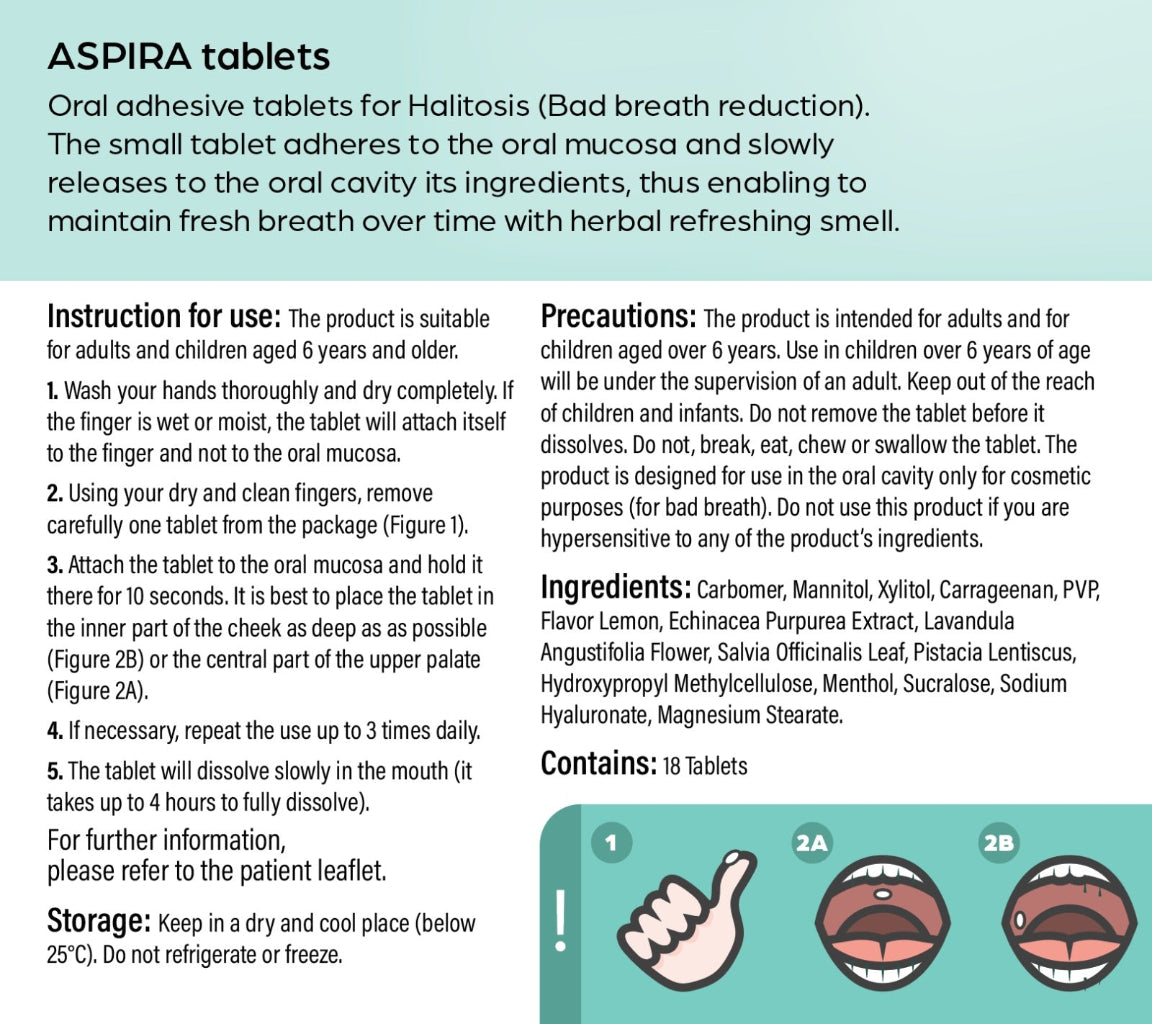
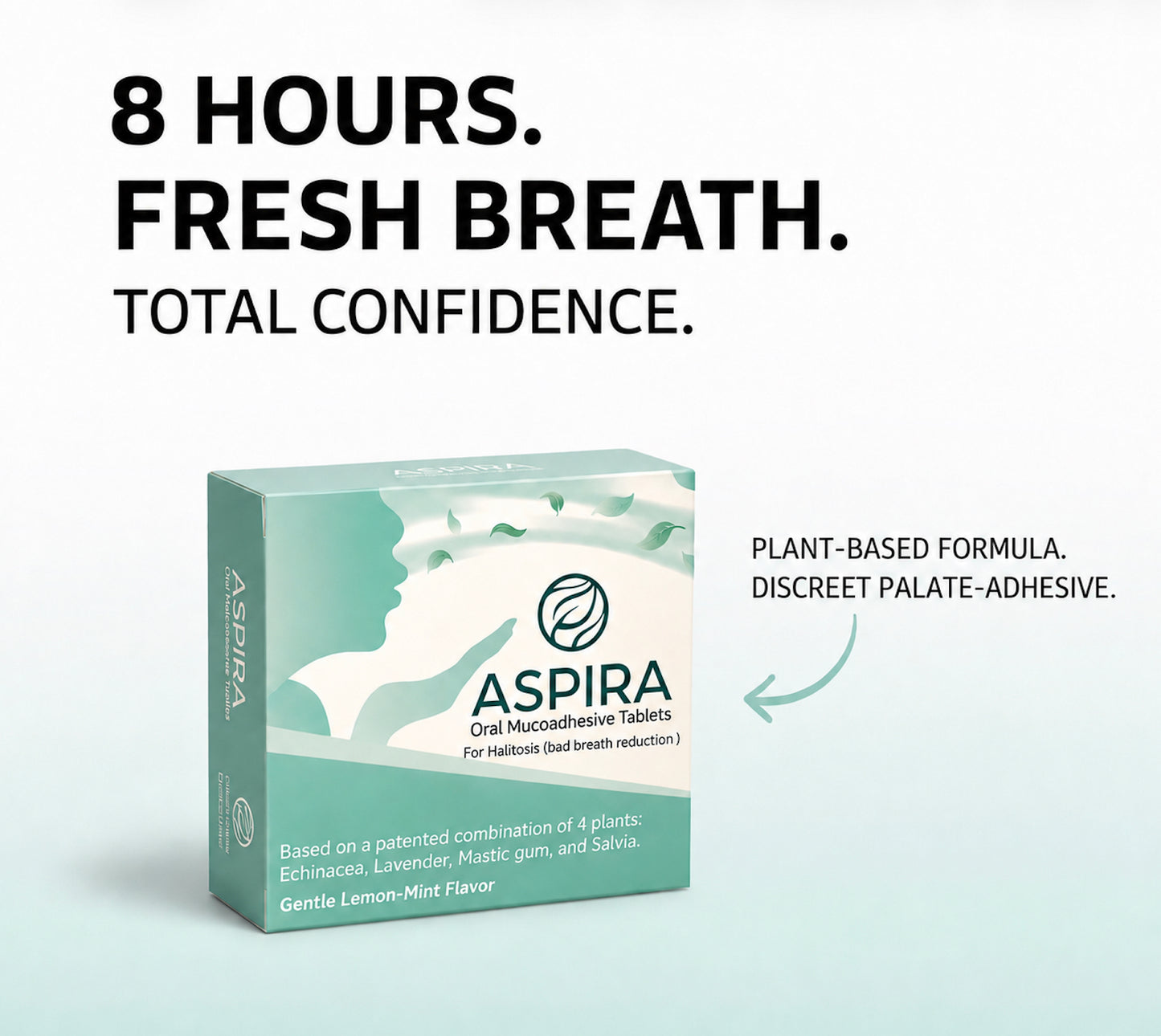
ASPIRA is a slow-release, mucoadhesive oral-care tablet. Rather than being chewed like gum or sucked like a traditional mint, it’s designed to adhere discreetly to the roof of your mouth or the inside of your cheek and gradually dissolve, releasing its herbal ingredients slowly over an extended period. It works quietly in the background — no chewing, no clacking, nothing to keep topping up. For people who are tired of thinking about gum or mints all day, that “set it and forget it” quality is much of the point.
The formula is a proprietary herbal combination of echinacea, lavender, mastic gum, and sage. It’s sugar-free, alcohol-free, and plant-based. ASPIRA is clinically backed and patented, and it is listed with the FDA under MoCRA as a cosmetic oral-care product.
A few deliberate clarifications, because precision matters here. ASPIRA is not a medication and is not a cure or treatment for dry mouth, xerostomia, halitosis, or any medical condition. It does not claim to kill bacteria, restore saliva, or fix your oral microbiome. What it is designed to do is offer a different approach to daily breath care: to help support lasting breath freshness through gradual release rather than relying only on a brief flavor burst. As with anything in this space, individual experiences may vary.
The appeal is less about transformation and more about fit. If you dislike constantly chewing gum or rummaging for a mint, a discreet tablet that works gradually may simply suit your life better. Designed to support lasting breath freshness is a modest claim — and a more realistic one than “never have bad breath again.”
The quiet mental weight of worrying about your breath
There’s a part of this that the science sections never quite capture, and it deserves naming: the mental load. Persistent breath worry has a way of sitting in the back of your mind all day.
Maybe you’ve caught yourself covering your mouth when you laugh, or taking a small step back in a close conversation. Maybe you angle your face away when you talk, or quietly run your tongue over your teeth to check. Maybe you over-rely on gum, not because you love it, but because it’s the only thing that makes you feel safe to speak freely. In meetings, on dates, in any moment that matters, that low hum of self-monitoring can chip away at your confidence in ways that have nothing to do with how your breath actually smells to anyone else.
It’s worth being gentle with yourself about this. Breath anxiety is extremely common, and it tends to be self-reinforcing: the more you worry, the more you check, and the more central it becomes. The goal isn’t perfection or some flawless, permanently minty mouth that doesn’t exist for anyone. The goal is freedom from the constant monitoring — being able to lean into a conversation without doing a mental breath check first. That quiet confidence, more than any single product feature, is what a more sustainable approach to breath care is really offering.
When to talk with a professional
Most everyday dry mouth and bad breath is manageable with good habits and sensible products. But some situations call for a professional eye, and it’s worth knowing the difference.
Consider checking in with a dentist or healthcare professional when symptoms are persistent, severe, painful, unexplained, or accompanied by other changes you can’t account for. Bad breath in particular can be connected to a range of factors beyond dryness - gum health and dental issues, heavy tongue coating, certain medications, nasal or throat conditions, reflux-related concerns, and various other health conditions. A professional can help sort out which factors are at play for you, something no article or product can responsibly do from a distance.
None of this is cause for alarm. It’s simply the difference between managing a common, everyday issue and getting the right help when something more is going on.
The reframe worth keeping
Here’s the idea to carry with you. Fresh breath is not simply the presence of mint. More often, it’s the result of supporting a healthier, more comfortable oral environment over time - keeping your mouth hydrated, keeping debris in check, and giving your saliva the conditions it needs to do its quiet, constant work.
Seen that way, the endless cycle of stronger mints and sharper mouthwashes starts to look like what it is: a way of managing the symptom while leaving the environment unchanged. There’s nothing wrong with a mint when you want one. But if you’ve been chasing freshness that never quite stays, you may be ready for a different rhythm entirely — something gradual, discreet, and designed for the long stretch of an ordinary day rather than a thirty-second burst.
That’s the space ASPIRA was made for: a calmer, more sustainable alternative for people who’d rather not spend their day thinking about gum, mints, sprays, and mouthwash at all.
Discover a different approach to daily breath freshness with ASPIRA →
Individual experiences may vary.
Frequently asked questions
Can dry mouth cause bad breath?
Dry mouth is one of the most common contributors to everyday bad breath. Saliva normally acts as a natural cleansing system, diluting and washing away the food particles, shed cells, and bacterial waste products that produce odor. When saliva is reduced, that debris can accumulate and the sulfur compounds behind bad breath can become more concentrated, so breath tends to turn stale more easily. It’s not that dryness single-handedly creates odor; it’s that a drier mouth removes one of your main defenses against it.
Why is my breath worse when my mouth feels dry?
Because the two are mechanically linked. The odor molecules behind bad breath - volatile sulfur compounds like hydrogen sulfide and methyl mercaptan - are produced by ordinary oral bacteria as they break down proteins, largely on the tongue. Saliva normally keeps these compounds diluted and moving. When your mouth is dry, there’s less fluid to rinse them away, so they linger and concentrate. That’s also why breath often worsens through the day and why morning breath exists at all: saliva flow drops during sleep, letting things build up overnight.
Why do gum and mints only help temporarily?
Most gum and mints are designed for a short window. Mints mainly deliver a strong flavor that masks odor without changing the conditions producing it, so when the flavor fades, you’re back where you started. Gum can briefly stimulate saliva while you chew, which genuinely helps - but only for as long as you’re chewing. Neither is built to support your oral environment over a longer stretch. That’s not a flaw in how you’re using them; it’s simply what short-duration products do. Feeling minty and having lasting fresh breath aren’t always the same thing.
Can menopause contribute to dry mouth and bad breath?
Yes. Hormonal changes around menopause are associated with reduced saliva for many people, and since lower saliva can contribute to odor, menopause dry mouth and bad breath often show up together. This is a common and normal experience rather than a sign something is wrong. Staying hydrated, gentle tongue cleaning, and consistent oral care all help; if the dryness is persistent or uncomfortable, a dentist or healthcare professional can offer guidance tailored to you.
Can medications cause dry mouth?
Very commonly. A wide range of frequently prescribed medications list dry mouth as a side effect, spanning treatments for blood pressure, allergies, mood, pain, and many others. Medication-related dryness is one of the leading causes overall. If you think a prescription is drying out your mouth, the right step is to discuss it with the professional who prescribed it - not to stop or change your medication on your own. They can weigh the trade-offs and suggest ways to manage the dryness.
Can GLP-1 medications be associated with breath changes?
For some people, yes. GLP-1 medications used for diabetes and weight management are frequently linked to dry mouth, which can in turn affect breath. The dryness appears to stem largely from downstream effects — reduced appetite, lower fluid and food intake, slower digestion, and altered thirst — rather than a direct effect on the salivary glands, and it’s often most noticeable in the early weeks or after a dose increase. If you’re on a GLP-1 medication and notice changes in hydration or breath, it’s worth raising with your healthcare provider, who can help you manage hydration and oral comfort.
What is the difference between masking bad breath and supporting longer-lasting freshness?
Masking means covering an odor with a strong flavor without changing what’s producing it; the moment the flavor fades, the underlying situation is unchanged. Supporting longer-lasting freshness means working with your mouth’s own environment over time — staying hydrated, keeping debris and tongue coating in check, and using products designed for gradual, sustained use rather than a brief burst. Masking is a quick fix for a moment; support is a steadier approach for the whole day. Both can have a place, but they solve different problems.
How is ASPIRA different from a mint or gum?
ASPIRA is a slow-release, mucoadhesive tablet rather than something you chew or suck. It’s designed to adhere discreetly to the roof of your mouth or inner cheek and dissolve gradually, releasing its plant-based herbal ingredients — echinacea, lavender, mastic gum, and sage — slowly over an extended period. It’s sugar-free, alcohol-free, clinically backed, patented, and listed with the FDA under MoCRA as a cosmetic oral-care product. Where a mint delivers a brief flavor burst, ASPIRA is built to work quietly in the background, which may particularly appeal to people who’d rather not chew gum or use mints all day. It is not a medication or a treatment for any condition, and individual experiences may vary.
Part of our guide to what causes bad breath — VSCs, where they come from, and what reduces them.