
Your Mouth on Ozempic: What's Really Happening (and What Actually Helps)
You're feeling better in your body. Energy is up, the scale is moving, and you're finally saying yes to social plans you'd been avoiding. Then someone leans in close, and you catch yourself wondering — is my breath okay?
It's one of the most common things people on GLP-1 medications like Ozempic, Wegovy, and Mounjaro quietly Google. And yet it almost never comes up in the prescription conversation.
Here's what's actually going on — and what you can do about it beyond popping a mint every hour.
It's Not Just One Thing. It's Three.
Most articles about GLP-1 breath issues point to ketosis — the metabolic state your body shifts into when you're eating significantly less. And that's real. But it's only part of the picture. When you're on a GLP-1 medication, your mouth is dealing with three shifts happening at once:
- A changed oral microbiome. Your mouth hosts hundreds of bacterial species that exist in a delicate balance. Eating regularly — chewing, swallowing, producing saliva — is part of what keeps that balance stable. Dramatically reduce your food intake and the ecosystem shifts. Certain anaerobic bacteria (the kind that thrive in low-oxygen, low-saliva conditions) can become more dominant, and those are exactly the bacteria that produce the volatile sulfur compounds responsible for odor.
- Slower digestion reaching the mouth. GLP-1 medications slow gastric emptying — the rate at which your stomach moves food along. For some people, this means gases from slowed digestion can travel upward, contributing to breath that has nothing to do with what's happening in the mouth itself. This varies considerably from person to person and is worth discussing with your prescriber if it seems significant.
- A drier oral environment than you realize. GLP-1 users eat less and often report reduced thirst — but hydration directly affects saliva volume. Less saliva means less of your mouth's natural cleansing action, and more opportunity for odor-causing bacteria to settle in and stay.
The Dehydration Loop Nobody Warns You About
Here's a pattern that comes up again and again: you're not hungry, so you're not eating. You're not eating, so you're not drinking alongside meals. And because GLP-1 medications can blunt thirst signals for some people, you may be significantly less hydrated than you think — even while your body composition is improving.
Dehydration doesn't just dry out the mouth. It reduces the proteins and enzymes in saliva that actively fight bacteria. Some researchers describe saliva as the mouth's built-in antimicrobial system — and when you're chronically on the lower end of hydration, that system runs at reduced capacity.
The practical implication: set hydration cues that don't depend on hunger or thirst. A glass of water in the morning before anything else, one mid-morning, one with whatever meal or snack you do have — not because of thirst, but as a non-negotiable habit.
Why Mints and Gum Keep Failing You
If you've been relying on mints or chewing gum to manage this, you've probably noticed they stop working after a few minutes. That's not a product quality issue — it's a timing mismatch. The compounds that cause breath odor are continuously produced by bacteria living in your oral environment. A mint that dissolves in 90 seconds or gum you chew for five minutes doesn't change anything about that environment.
There's also a chewing problem with gum specifically: for some GLP-1 users, the act of chewing gum can stimulate appetite signals they're trying to manage, or trigger nausea. It's a reasonable solution that often doesn't fit.
What tends to work better is something that stays in contact with the oral environment over a longer window — addressing the bacteria where they are, rather than masking the output for a few minutes.
A Practical Daily Protocol
Beyond the usual (brush twice, floss, see your dentist) — here's what tends to make a real difference for people managing breath changes on GLP-1 medications:
- Scrape your tongue every morning. The dorsal surface of the tongue is the primary home for the bacteria that produce sulfur compounds. Brushing your teeth doesn't clear it. A tongue scraper takes 30 seconds and removes a significant portion of overnight bacterial accumulation.
- Drink water before checking your phone. Overnight, saliva production drops. Morning breath is universal — but on GLP-1, the overnight dryness can be more pronounced. Rehydrating first thing starts your saliva production before anything else.
- Eat something, even if you don't want to. Even a small amount of food triggers chewing, which triggers saliva, which flushes the oral environment. Some GLP-1 users find their breath is worse on days they skip eating entirely. A few bites is enough to make a difference.
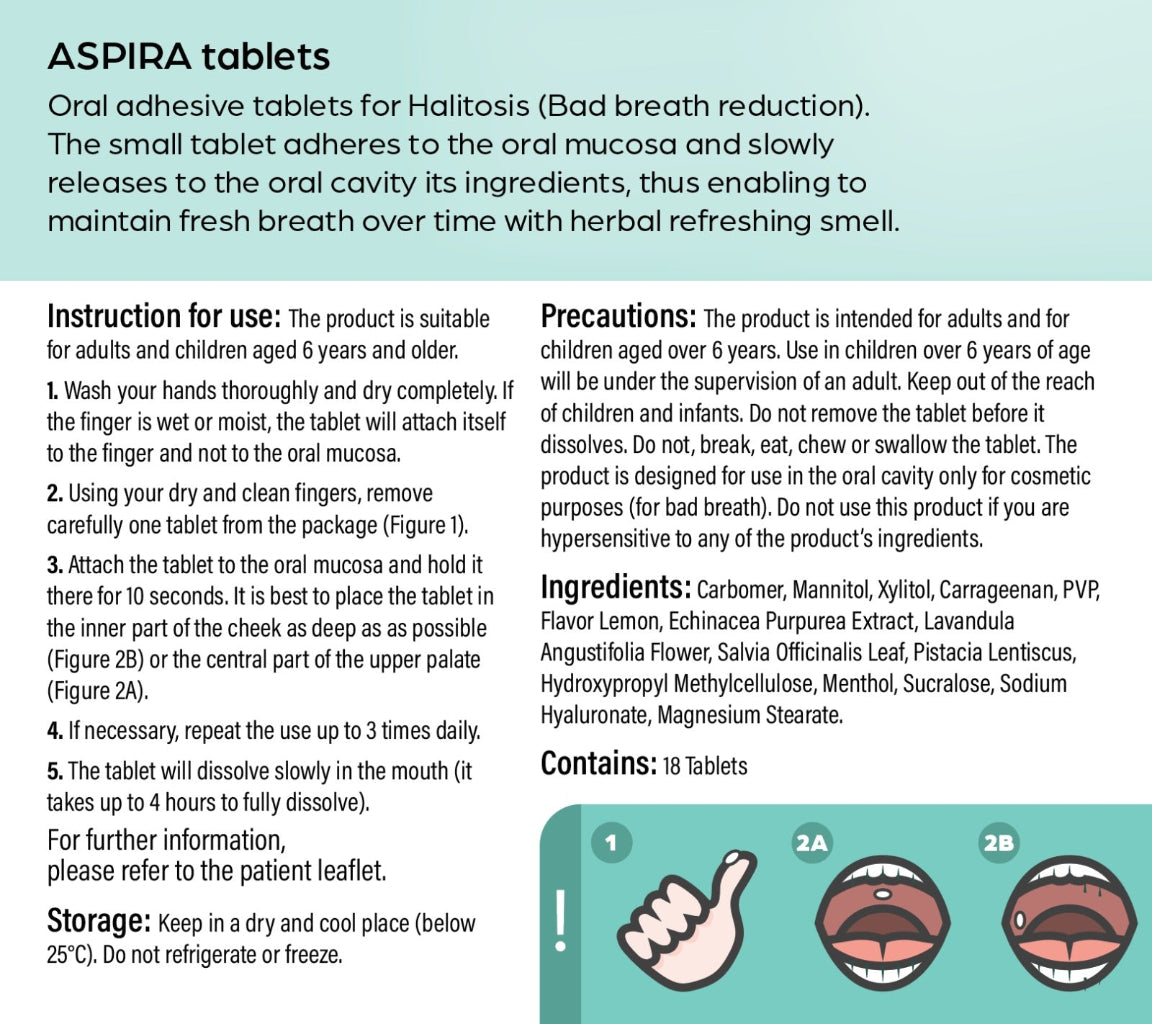
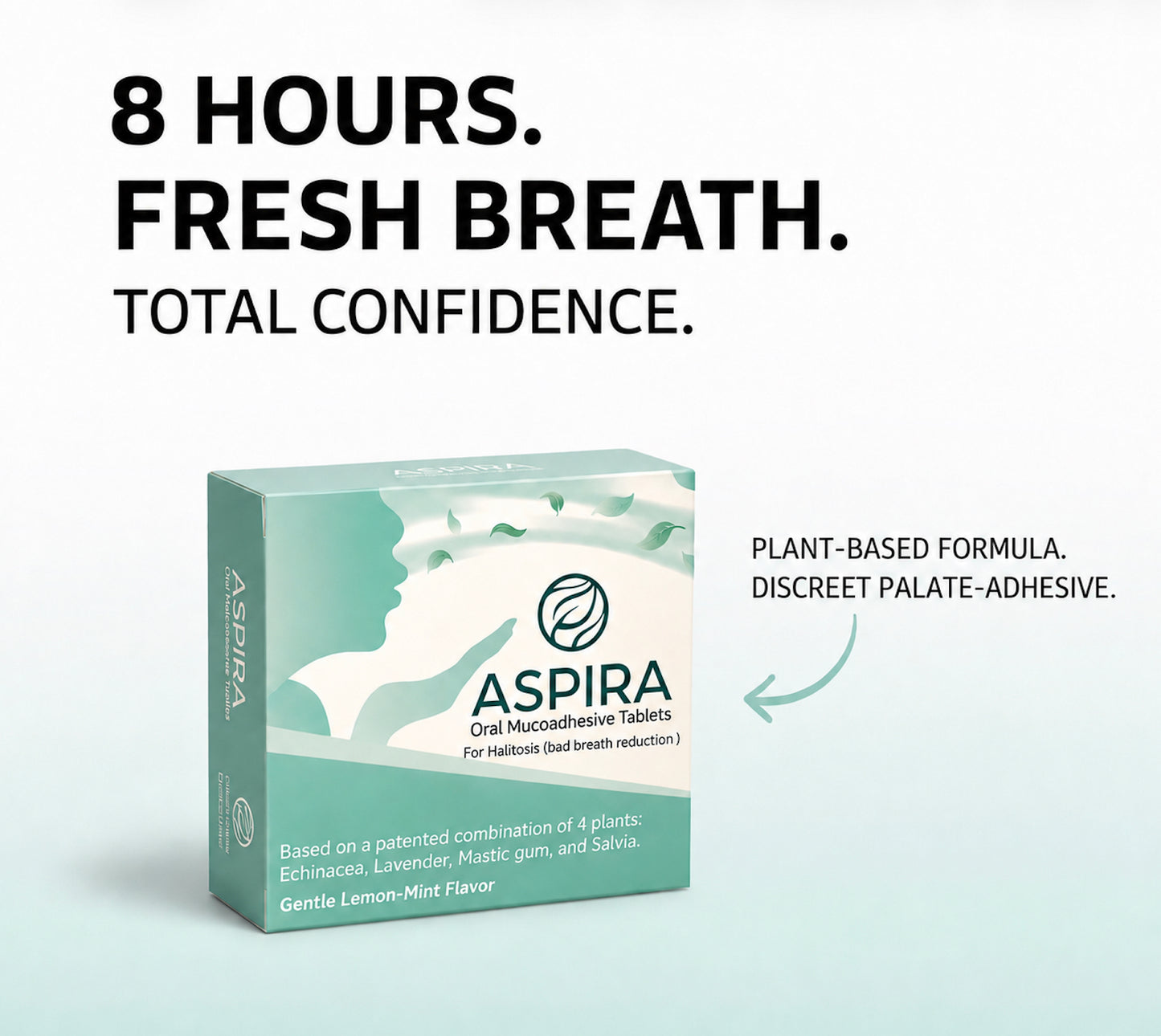
- Use something that lasts longer than a mint. Look for oral care products designed for sustained contact rather than instant freshness. ASPIRA's slow-dissolving tablet adheres to the inner cheek and releases plant-based actives — Sage, Echinacea, Mastic gum, and Lavender — over two to three hours. No chewing required, nothing to swallow, and it stays active through meetings, commutes, and social situations rather than wearing off in minutes.
The Bottom Line
GLP-1-related breath changes are real, they're common, and they're not a sign that something is wrong with your health or your medication. They're a byproduct of how dramatically these drugs change your eating patterns — and your mouth adjusts slowly to those changes.
The good news: this is very manageable. It just requires approaching it differently than standard bad breath — understanding that the source is an altered oral environment, not a one-time cause, and choosing solutions designed to work with that environment rather than just temporarily covering it.
Most people find that the combination of consistent hydration, tongue scraping, and a longer-acting oral care option takes care of it. Give it a week of consistency before deciding what works for you.
This article is for informational purposes only and is not intended as medical advice. If you're experiencing significant digestive symptoms or other side effects on a GLP-1 medication, speak with your prescriber.
Part of our guide to what causes bad breath — VSCs, where they come from, and what reduces them.