
Why Bad Breath Costs Sales Reps More Than Just Confidence - It Costs Deals
Lior HendlerThere's a lot of advice out there about what makes a great salesperson. Sharpen your pitch. Build genuine rapport. Listen more than you talk. Master the follow-up. Nobody talks about breath. That's a mistake - because sales is one of the few professions where you're routinely inches away from someone whose opinion of you directly affects your income. Client lunches. Trade show booths. Conference room presentations. Side-by-side demos. The job puts you in close physical proximity, over and over again, often under the exact conditions that make breath harder to manage. It's worth taking seriously.
The Unique Breath Challenges of a Sales Career
Most people think about bad breath in passing — an awkward moment, quickly forgotten. For sales professionals, the stakes are different. Consider a typical high-activity sales day: a coffee at 7am before a morning call blitz, a quick lunch at your desk before a 1pm demo, an afternoon of back-to-back discovery calls, then drinks with a prospect at 6pm. Each of those transitions creates a fresh opportunity for breath to become a factor — coffee's acidity, food particles, dehydration from talking for hours, and alcohol in the evening all contribute to an oral environment that's working against you. Add in the fact that many sales pros are frequent flyers — dry recycled airplane air is notoriously hard on saliva production — and you have a profession that's genuinely more exposed to breath challenges than most.
How Breath Anxiety Shows Up in the Sales Room
Here's the part nobody says out loud: it's not always the breath itself that costs the deal. Often, it's the worry about it. Researchers have a name for the fear of having bad breath — halitophobia — and while the clinical version is relatively rare, a milder form of breath self-consciousness is extremely common, especially in high-pressure professional settings. And when it kicks in, the behavioral changes are subtle but real. You lean back instead of leaning in. You speak a little faster to get the interaction over with. You avoid the unhurried small talk that actually builds trust — because you'd rather keep your distance.
None of this is conscious. But collectively, it chips away at exactly the quality that separates good salespeople from great ones: the ability to be fully present, warm, and confident in close conversation. Rapport is built in proximity. If breath anxiety is quietly pushing you back, it's worth addressing directly.
The Usual Solutions (And Why They Fall Short)
The go-to fixes are well-known: breath mints, chewing gum, a quick rinse before a meeting. And they work — for about 10 to 15 minutes. That might be fine for a single elevator pitch. But it doesn't hold up across a four-hour trade show booth shift, a long client dinner, or a full day of back-to-back meetings with no convenient break to refresh. The core problem is contact time. Most conventional breath products work on the surface and dissipate quickly — they mask odor rather than addressing the bacterial activity that produces it. The moment they're gone, you're back where you started. For casual use, that's fine. For someone whose professional livelihood depends on showing up confident and present hour after hour, it's worth looking for something designed to last longer.
What Actually Helps (Backed by Common Sense and Some Science)
Stay hydrated — more than you think you need to. Saliva is your mouth's natural defense against odor-causing bacteria. Talking for hours, breathing through your mouth, and drinking coffee all reduce saliva flow. Consistent water intake throughout the day helps maintain that protection. Many people who present or sell for a living find that dehydration is the single biggest driver of afternoon breath issues.
Mind your pre-meeting menu. Sulfur-containing foods — garlic, onions, certain cheeses — can linger in the bloodstream and affect breath for hours, well beyond what any mint can address. Saving the garlic bread for post-close celebrations is a reasonable professional habit.
Breathe through your nose when you can. Mouth breathing — common during high-energy presentations or long stretches of talking — dries out the oral environment quickly. Even consciously shifting back to nasal breathing between speaking bursts can make a noticeable difference.
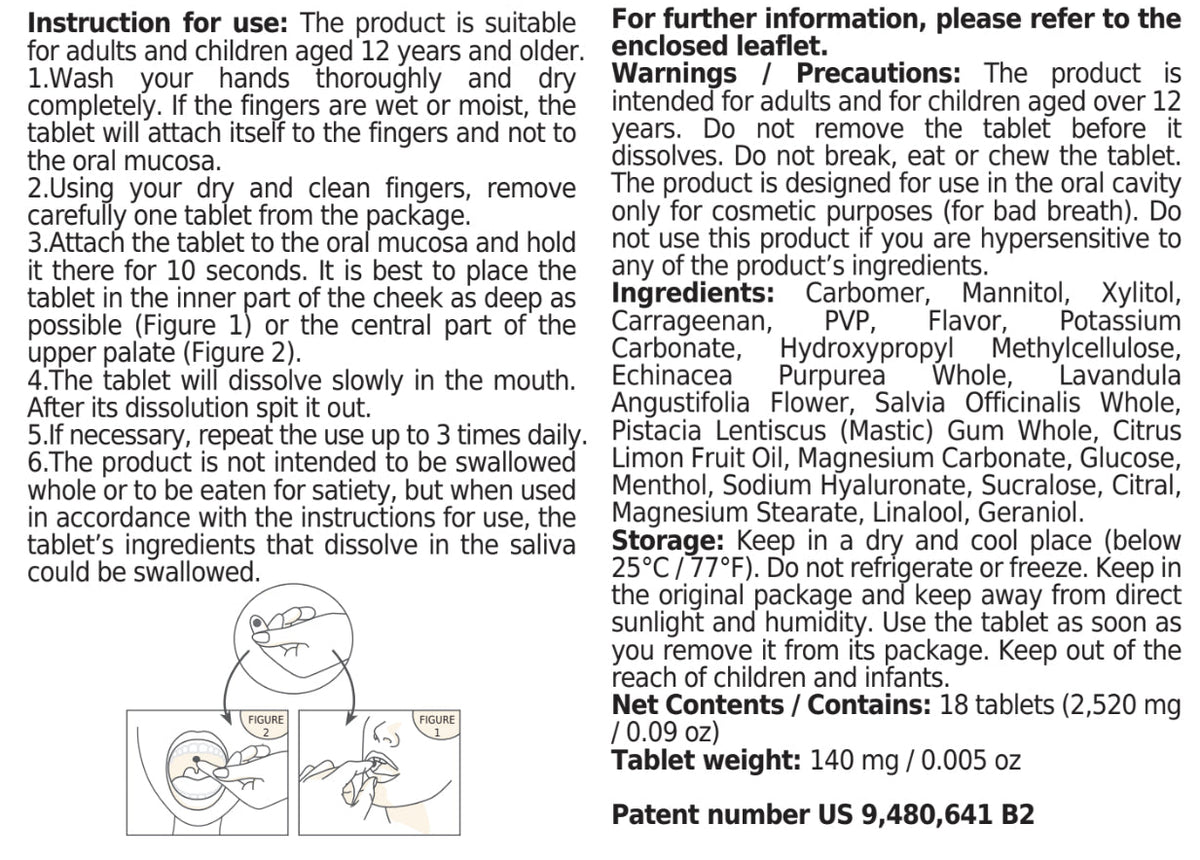
Choose products designed for sustained use. This is where the category is evolving. Slow-dissolving oral care formats — like dissolvable tablets, which adhere to the inner cheek and stay active for 2–3 hours — are designed specifically for extended use that mints and gum aren't built for. The active ingredients work over time, not just in the first few minutes.
Confidence Is a Competitive Advantage
Top performers in sales share a quality that's hard to teach and easy to underestimate: they're physically comfortable in close conversation. They don't shrink. They lean in. They hold eye contact. They let silences breathe. And they do all of this without the subtle self-consciousness that comes from worrying about how they're perceived up close. When you remove that worry — when you know your breath is handled — you free up mental energy for what actually matters: listening, responding, and building the kind of genuine connection that turns prospects into clients. That's not just better for your confidence. It's better for your numbers.
Part of our guide to the full guide to bad breath — what causes it, and what reduces it.