
Why Protein Shakes Make Your Breath Smell
Lior HendlerProtein doesn't smell. The bacteria that break it down do. Two of the amino acids in protein — cysteine and methionine — are the raw material your mouth bacteria convert into hydrogen sulfide and methyl mercaptan, the compounds behind roughly 90% of bad breath. Push more protein through your mouth and you hand those bacteria more to work with.
That's the short version. The longer one is more useful, because "protein shake breath" is really three different problems with three different smells, and what fixes one won't touch the others.
It's the bacteria, not the protein
The back of your tongue is the problem. Not your teeth, not your stomach.
The tongue's surface is covered in ridges and grooves that trap food debris and dead cells, and saliva can't wash it out properly. Anaerobic bacteria live down in there, and their job is breaking down proteins. The byproduct is volatile sulfur compounds — hydrogen sulfide and methyl mercaptan, mostly. Those two account for about 90% of what you smell. (Frontiers in Oral Health, 2023)
You can watch this happen in real time. In a lab test, people rinse with a cysteine solution for 30 seconds. Sulfur compounds in their breath spike immediately — then fall back within 10 to 20 minutes as the substrate runs out. (Scientific Reports, 2025)
That's the whole mechanism in one experiment. Put the raw material in your mouth, get the smell. Which is exactly what a protein shake is.
Three smells, three causes
Most articles on this treat "protein breath" as one thing. It isn't. Work out which one you've got:
| What it smells like | What it is | What's causing it |
|---|---|---|
| Rotten, sulfurous, like an egg gone off | Hydrogen sulfide and methyl mercaptan | Bacteria on your tongue breaking down protein residue |
| Sharp and chemical, faintly like a cleaning product | Ammonia | Your body processing a large protein load |
| Sweet and fruity, like nail polish remover | Acetone | Ketosis — which is about low carbs, not high protein |
The first is the common one and the one you can do something about today. The second is real but probably not what anyone around you is noticing. The third isn't a protein problem at all.
The sulfur smell
This is the one people mean. Protein residue sits on your tongue after a shake, the bacteria get to work, and you get the classic rotten-egg note. It's the same mechanism behind morning breath, just triggered by what you drank instead of by eight hours of no saliva.
The ammonia smell
This one is measurable. In a controlled study, 22 men were given 0g, 30g, or 60g of protein, and breath ammonia rose with the dose — peaking around three hours after the biggest serving. (Scientific Reports, 2018)
Worth being straight about what that means. The measurements were in parts per billion, taken by instrument. Rising on a machine is not the same as detectable by a person standing near you. If your breath smells sharp after a big protein day, ammonia is a plausible explanation. Nobody has shown it's one you can actually smell.
The fruity smell
If your breath has gone sweet or solvent-like, that's acetone, and it means you're in ketosis. It comes from cutting carbs, not from adding protein — people just tend to do both at once. Breath acetone can rise more than fivefold on a ketogenic diet. We've written about keto breath separately, because the fix is different.
Does whey protein cause bad breath?
Probably, a little. But the honest answer is that nobody has measured it.
There is no study anywhere that tested breath before and after a whey shake. Not one. Everything you'll read claiming whey specifically causes bad breath is repeating a guess.
Here's what's actually true, and where it stops being true:
- Whey is unusually high in cysteine. That's well documented — it's the reason whey gets studied as a way to raise glutathione. And cysteine is the direct precursor to hydrogen sulfide in your mouth. So the mechanism is plausible.
- Plausible is not proven. No one has connected those two facts with an actual measurement. Treat it as a reasonable hypothesis, not a finding.
- The boring explanation is probably the bigger one. A shake coats your mouth and tongue in protein residue and sits there. That's food delivered directly to the surface where the odour bacteria live. It doesn't require anything special about whey.
One myth worth killing while we're here: dairy does not cause bad breath. If anything the opposite — milk has been shown to reduce the sulfur compounds from garlic breath. (Journal of Food Science, 2010)
Does creatine cause bad breath?
Almost certainly not — and the usual explanation for why it would is wrong.
This one gets repeated constantly in gym forums, so it's worth going through properly.
Creatine contains no sulfur. Look at the formula: C₄H₉N₃O₂. There's no sulfur atom in it. It cannot be the raw material for sulfur compounds, because it doesn't contain the raw material.
The safety literature doesn't report it. The largest analysis to date went through 685 clinical trials — roughly 12,800 people on creatine against 13,400 on placebo. Side effects showed up in 13.7% of creatine studies and 13.2% of placebo studies, a difference that disappears at the individual level. Bad breath doesn't appear as a reported side effect at all. (Journal of the International Society of Sports Nutrition, 2025)
And the usual story falls apart. The explanation you'll see is "creatine dehydrates you, dehydration dries your mouth, dry mouth causes bad breath." The middle and end of that chain are fine. The beginning isn't. The ISSN position stand on creatine found that users experienced less cramping and heat illness, not more. (JISSN, 2017)
So why do so many people notice it when they start creatine?
Because of what else changes at the same time. Someone starting creatine is usually also increasing protein, training harder, breathing through their mouth more, and often cutting carbs. That's three or four real causes of breath change all arriving in the same week as one new supplement. The supplement gets the blame.
If your breath changed when you started creatine, look at the rest of the stack.
Does a high-protein diet cause bad breath?
The mechanism says yes. The evidence hasn't caught up.
What's established: the sulfur amino acids in protein are what oral bacteria turn into odour compounds, and putting those amino acids directly in someone's mouth spikes their breath readings within seconds.
What's missing: nobody has run the actual dietary study. No one has taken a group of people, moved them from 80g of protein a day to 200g, and measured what happened to the sulfur compounds in their mouths. A review of how diet affects breath chemistry found no established link between dietary protein and breath sulfur compounds — mainly because so little work has been done on it. (Journal of Nutritional Science, 2013)
Which is a longer way of saying: probably, somewhat, but nobody has measured it, and anyone quoting you a number is guessing.
Why it's worse if you train
Saliva is what keeps this under control. It rinses residue off your tongue, and it carries oxygen — which matters, because the bacteria producing the smell are anaerobes that don't like it.
Train hard and you breathe through your mouth for an hour, which dries it out. Low resting saliva flow is significantly associated with stronger oral malodour. (BMC Oral Health, 2017)
So the shake lands in a mouth that's already short on the thing that would have cleared it. We go into the training side of this in more detail in why you get bad breath after working out.
The same thing catches people who aren't training at all. If you're on a GLP-1 medication or recovering from bariatric surgery, you're likely drinking two or three protein shakes a day with reduced saliva flow — the same combination, without the gym. We've covered GLP-1 and breath changes separately.
What actually helps
A caution before the list. In 2019, Cochrane reviewed every intervention for managing bad breath and rated the evidence low to very low across all of them — tongue cleaning, gum, mouthwashes, the lot. (Cochrane Database, 2019) Anyone quoting you a percentage improvement is inventing it. Here's what's worth doing anyway, roughly in order of return:
Rinse your mouth after a shake. Plain water, ten seconds. This is the highest-value thing on the list and nobody does it. The substrate spike is short — that lab test showed it clearing within 10 to 20 minutes — so getting the residue off before the bacteria finish with it targets a real window.
Clean your tongue, not just your teeth. The bacteria are on the back of your tongue, so brushing your teeth misses them entirely. The evidence here is genuinely weak — Cochrane found two trials totalling 40 people, and called it unreliable — but it's aimed at the right place, and it costs you fifteen seconds.
Keep saliva moving. Water through the session, not just after. This one is an association rather than a trial: low saliva flow tracks with worse breath, but no one has tested whether drinking more fixes it.
Zinc has the best mechanism of anything here. Zinc ions bind hydrogen sulfide directly and suppress the growth of the bacteria producing it. (Journal of Applied Oral Science, 2018) The clinical evidence is still low-certainty, but the chemistry is sound.
Mints and gum don't fix it. They add a smell on top of a smell for about fifteen minutes. If that's your whole strategy you already know it isn't working — we've written about why mints and gum don't actually fix bad breath.
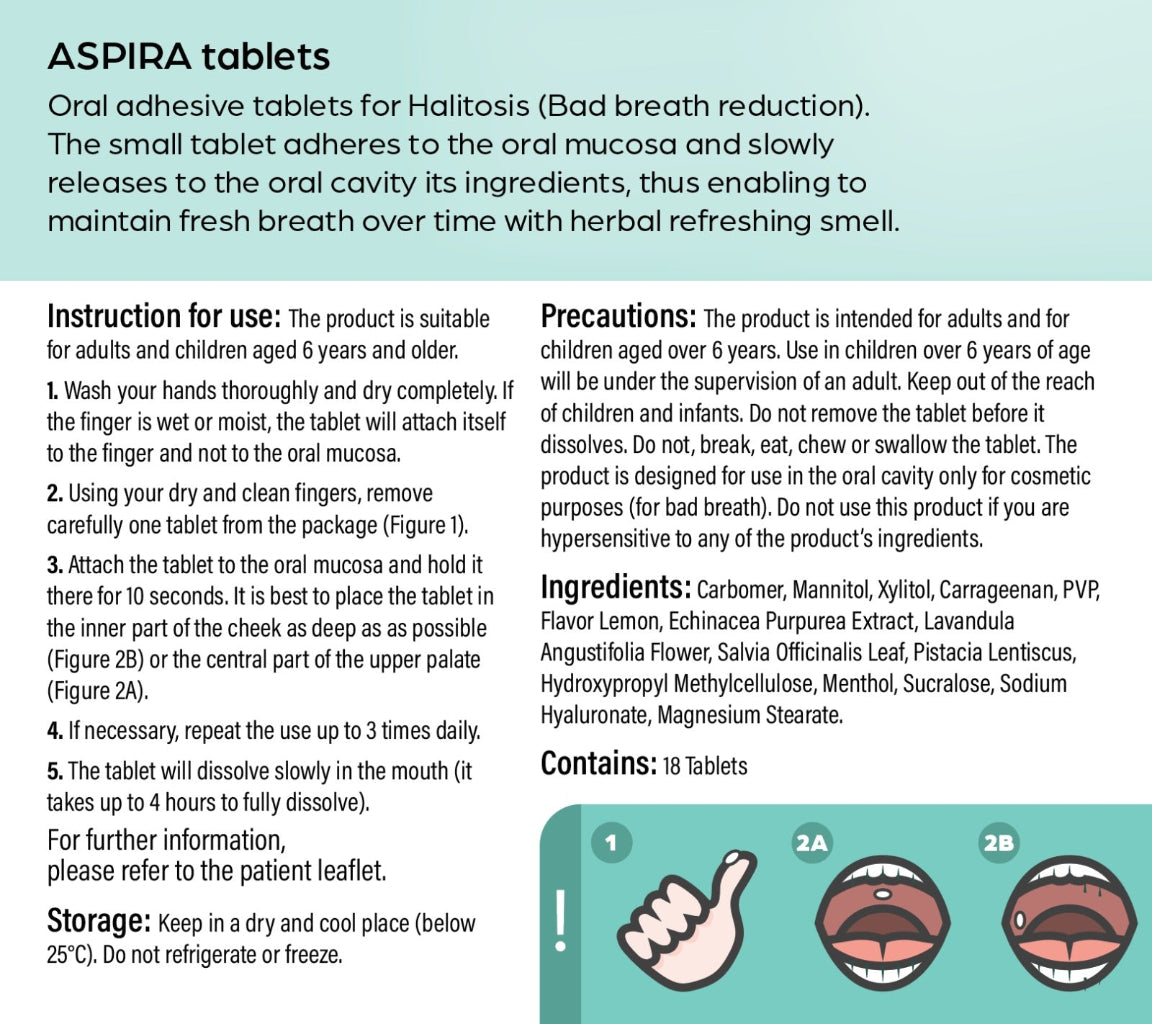
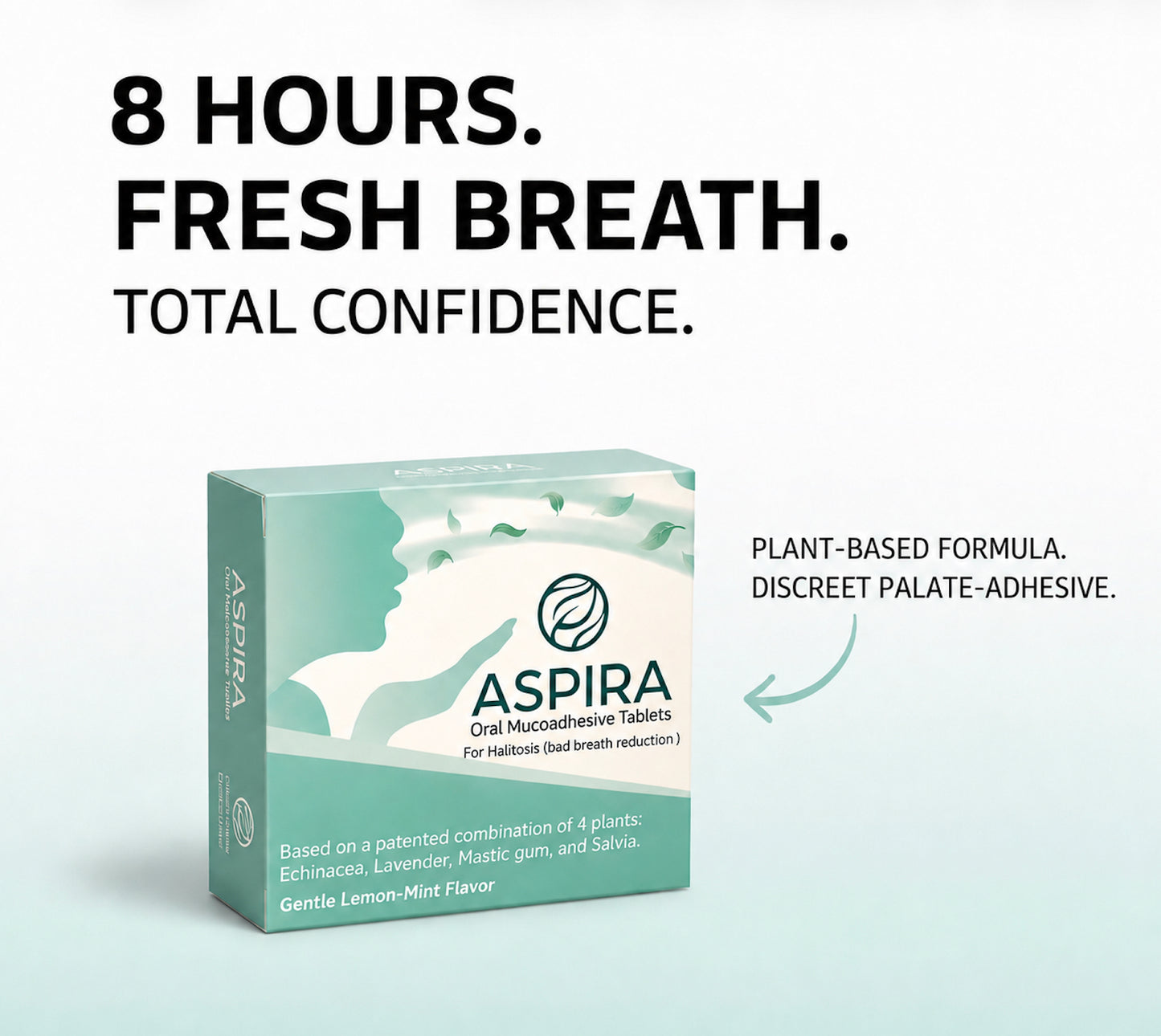
Worth noticing what the shape of this problem is. The spike right after a shake is short and you can rinse it away. What most people are actually dealing with is the baseline — breath that drifts through a long day of training, meetings and meals. That's the gap ASPIRA was built for: four plant extracts in a tablet that adheres to your palate and releases slowly, rather than something you re-apply every twenty minutes.
When it isn't the protein
Worth saying plainly. If your breath is bad regardless of what you eat, if it's been persistent for months, or if someone has told you about it more than once, the cause probably isn't your diet.
Persistent bad breath is most often gum disease or a chronic dry mouth issue, and both are dentist conversations. Changing your protein powder won't help, and neither will anything you buy for it. Get it looked at.
Frequently asked questions
Why do protein shakes make my breath smell?
Protein residue stays on your tongue after a shake, and the anaerobic bacteria living there break its sulfur-containing amino acids down into hydrogen sulfide and methyl mercaptan. Those compounds are what you smell. Rinsing your mouth with water straight after removes most of the residue before the bacteria get to it.
Does creatine cause bad breath?
There's no published evidence that it does. Creatine contains no sulfur, so it can't be raw material for the sulfur compounds behind bad breath, and the largest safety analysis — 685 trials — doesn't list bad breath as a side effect. Breath changes that show up alongside creatine are usually down to the extra protein, harder training and mouth breathing that arrive with it.
Does whey protein cause worse breath than other proteins?
Possibly, but it's never been tested. Whey is high in cysteine, which is the direct precursor to hydrogen sulfide in the mouth, so the mechanism is plausible. No study has compared breath after whey against casein, collagen or plant proteins.
What does high-protein breath smell like?
Usually rotten or sulfurous, like an egg that's gone off — that's hydrogen sulfide from bacteria on your tongue. A sharp, chemical smell points to ammonia from processing a large protein load. A sweet or fruity smell is acetone, which means ketosis from low carbs rather than high protein.
How long does protein shake breath last?
The spike straight after a shake is short. In lab conditions, sulfur compounds triggered by putting the substrate in someone's mouth fell back within 10 to 20 minutes. Breath that lasts all day is a baseline problem, not a shake problem.
Does drinking more water fix it?
It helps, though the evidence is thinner than you'd expect. Low resting saliva flow is clearly associated with worse breath, but no trial has shown that drinking more water reduces the compounds causing it. Rinsing after a shake has a more direct effect than sipping through the day.
Can I just take more protein at once to get it over with?
No — that runs the wrong way. Breath ammonia rose with dose in controlled testing, and a bigger single serving leaves more residue in your mouth, not less. Spreading protein across the day and rinsing after each serving is the better approach.
Should I stop taking protein powder?
No. This is a mouth problem, not a supplement problem, and it's solvable without giving up your protein intake. Rinse after shakes, clean your tongue, and if it persists regardless of diet, see a dentist.