
Why Your Breath Gets Worse When You're Hungry (The Fasting Halitosis Nobody Warns You About)
Lior HendlerYou're doing everything right. You've been fasting since last night, you're hours into your eating window, you feel sharp and disciplined — and then someone leans in close and you panic. Your breath. It's bad. Really bad. And you haven't eaten anything questionable. You haven't skipped brushing. You're drinking water.
So what's going on?
Fasting bad breath is real, it's common, and almost nobody talks about it before you start intermittent fasting. Understanding why it happens is the first step to actually fixing it — not just masking it for five minutes.
Why Does Fasting Cause Bad Breath?
There isn't one single cause — there are three, and they compound each other the longer your fast goes on.
1. Your saliva production drops.
This is the big one that nobody talks about. Saliva isn't just for swallowing — it's your mouth's natural self-cleaning system. It washes away bacteria, neutralizes acids, and keeps the environment in your mouth hostile to odor-producing microbes.
When you eat, chewing physically stimulates the salivary glands. When you're fasting, that stimulus disappears. Your glands produce significantly less saliva — and the bacteria in your mouth know it. They multiply faster in dry conditions, and the byproduct of their activity is volatile sulfur compounds, or VSCs: the molecules responsible for the sharp, unpleasant smell of bad breath.
This is why your breath gets worse the longer into a fast you go. It's not one moment — it's a gradual buildup as saliva levels fall and bacteria seize the opportunity.
2. Your body starts producing ketones.
Once your body burns through its glycogen stores (usually 12–16 hours into a fast), it switches to burning fat for fuel. That process produces ketone bodies as a byproduct — specifically acetoacetate, which breaks down into acetone.
Acetone exits the body through your breath. It has a distinctive fruity or slightly chemical smell — different from the sulfuric odor of bacteria-driven halitosis, but equally noticeable. If you're regularly fasting or following a low-carb diet, you may be dealing with both types simultaneously.
3. You're compounding the overnight buildup.
Everyone wakes up with some degree of morning breath. During sleep, saliva production slows dramatically, and bacteria have 6–8 uninterrupted hours to produce VSCs. When you wake up and extend your fast into the morning — a common pattern for 16:8 intermittent fasting — you're not resetting that bacterial clock. You're extending it.
By hour 14 or 16 of your fast, you're carrying the bacterial accumulation of an entire night plus your waking hours. No amount of water fully reverses that.
Does Drinking Water Fix Fasting Bad Breath?
Partially — and temporarily. Water does help rinse the mouth and briefly dilute the concentration of VSCs. Staying well-hydrated during a fast is genuinely useful. But water doesn't kill bacteria, doesn't neutralize sulfur compounds, and doesn't stimulate saliva in the same way chewing does.
Think of it like rinsing a dirty pan with water. It helps, but it doesn't clean. The bacteria are still there, and the moment you stop sipping, they get back to work.
What Actually Helps With Bad Breath While Fasting
Here's what makes a real difference — especially if you're fasting regularly.
Scrape your tongue first thing. The back of your tongue is where most odor-causing bacteria live. A tongue scraper removes the biofilm that builds up overnight before you extend your fast into the morning. This is one of the highest-impact things you can do and takes about ten seconds.
Stay consistently hydrated. Small sips throughout your fast are more effective than big gulps occasionally. Consistent moisture keeps the oral environment less hospitable to bacteria.
Use something that works as long as you're fasting — not just for five minutes.
This is where the standard toolkit falls short. Mints dissolve in under a minute. Gum helps with saliva production but the antibacterial effect lasts only a few minutes. Mouthwash gives you 20–30 minutes at best, and alcohol-based formulas can actually dry your mouth out more, making things worse after the initial freshness fades.
The core problem is contact time. Your bacteria are active for hours. Most breath products are active for minutes.
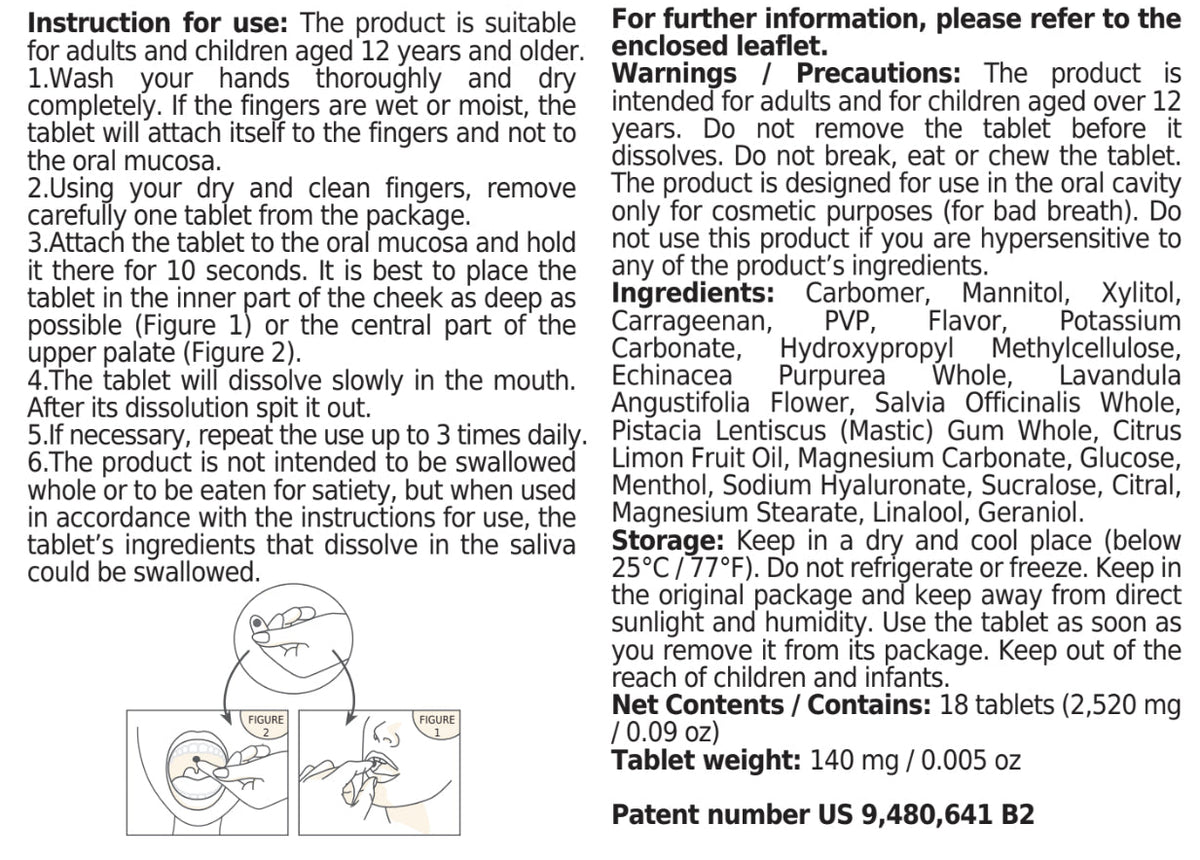
This is exactly what ASPIRA was designed for. It's a slow-dissolving oral care tablet — not a mint, not a spray — made with plant-based active ingredients including echinacea, sage, lavender, and mastic gum, all of which have antibacterial properties. You place it against your inner cheek or the roof of your mouth, where it adheres and dissolves over 2–3 hours, continuously releasing active ingredients the entire time.
It doesn't break a fast (no calories, no sugar), and it addresses the actual mechanism — bacteria and VSC production — rather than just masking the odor. For anyone fasting regularly, having something that quietly works in the background for hours is a genuinely different experience than anything mint-based.
A Note on Ketone Breath Specifically
If you're doing extended fasts or following a keto diet, some of your fasting breath may be ketone-driven rather than bacteria-driven. Antibacterial ingredients help with the VSC component, but ketone breath has a different origin — it's metabolic, not microbial. The only way to truly reduce ketone breath is to modify the diet or the fast length. However, most people experience both types simultaneously, so addressing the bacterial side still makes a significant difference in how your breath reads overall.
Frequently Asked Questions
Does intermittent fasting always cause bad breath?
Not always severely, but most people notice some degree of it — especially in extended fasting windows. The longer the fast, the more pronounced the effect tends to be, due to compounding saliva reduction and bacterial activity.
Does fasting bad breath mean I'm in ketosis?
Not necessarily. Bad breath during a fast can be caused by reduced saliva and bacterial overgrowth long before ketosis kicks in. Ketone breath is a specific, often fruity or chemical smell that usually appears after 12+ hours of fasting when the body has burned through glycogen stores.
Will drinking more water fix bad breath while fasting?
It helps, but it's not a complete solution. Water temporarily dilutes VSCs and helps maintain moisture, but it doesn't kill bacteria or stimulate saliva the way chewing does. Think of it as supportive, not curative.
Can I use mints or gum during intermittent fasting?
Most mints and gums won't break a fast calorically (especially sugar-free varieties), but they only work for a few minutes. The chewing action of gum does temporarily stimulate saliva, which is helpful — but the antibacterial window is very short. If you're fasting for 16 hours, you'd need a lot of gum to stay ahead of it.
Fasting is a discipline worth protecting. The breath side effect doesn't have to be the thing that makes you self-conscious through your most productive morning hours. Understanding what's actually happening — and using tools that match the duration of the problem — makes a real difference.
Part of our guide to what causes bad breath — VSCs, where they come from, and what reduces them.